



Deadly EEHV Virus Kills Sumatran Elephant Calf in Aceh
- 13 Agt 2026 01:44 WIB
- Voice of Indonesia
Poin Utama
- Yuna, a female Sumatran elephant calf under three years old, died at the Saree Elephant Training Center in Aceh on August 11, 2026.
- Her death is strongly suspected to have been caused by Elephant Endotheliotropic Herpesvirus (EEHV), pending laboratory test results.
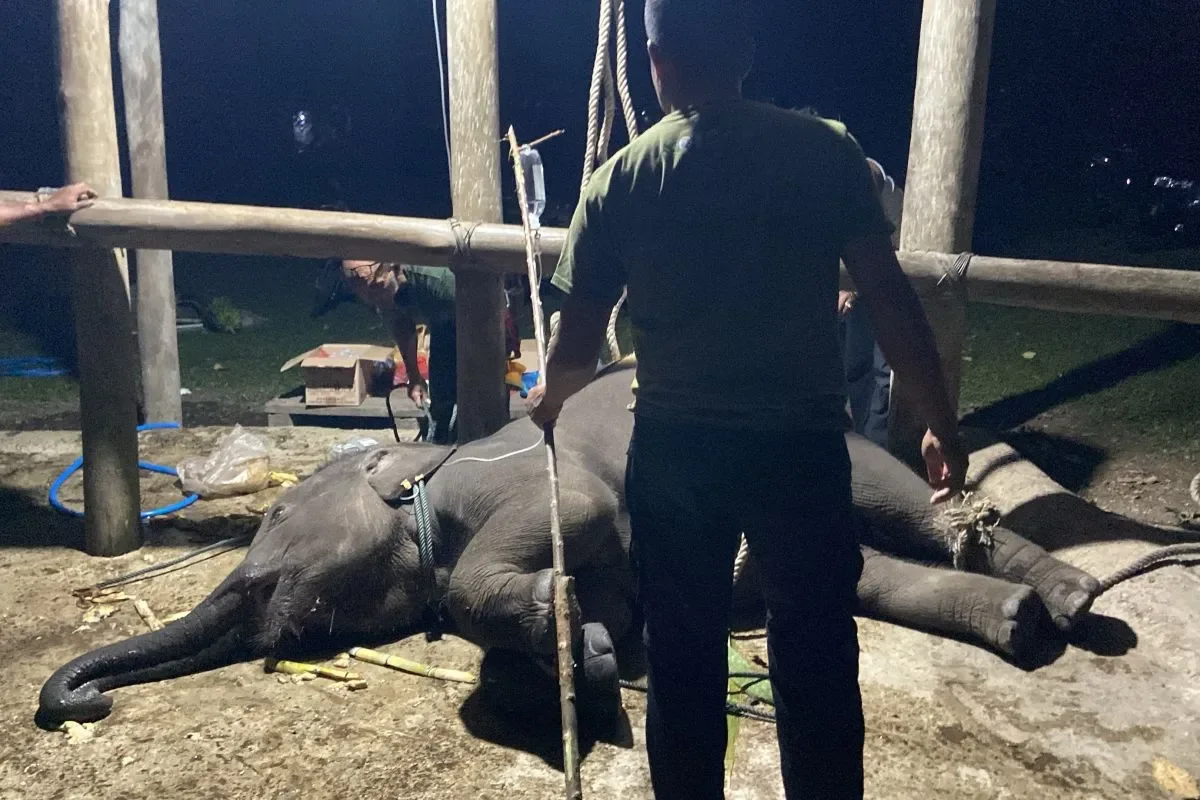
RRI.CO.ID, Jakarta - In just a matter of hours, a sudden attack of Elephant Endotheliotropic Herpesvirus (EEHV) claimed the life of Yuna, a Sumatran elephant (Elephas maximus sumtranus) calf under three years old at the Saree Elephant Training Center (PLG) in Aceh.
This silent killer, with a mortality rate reaching 80 percent, acts with devastating speed, damaging blood vessels and posing the deadliest threat now facing the survival of the next generation of Sumatran elephants.
Head of the Aceh Natural Resources Conservation Center (BKSDA), Ujang Wisnu Barata, confirmed that Yuna, a female calf under three years old born to the mother elephant Gajah Suci, passed away on Tuesday night, August 11, 2026.
“Yuna’s condition deteriorated extremely rapidly, which, based on the initial diagnosis, was triggered by an attack of this lethal virus specific to young elephants. Macroscopically, symptoms were evident from facial swelling, red eyes, and a bluish mucous membrane on the tongue, along with microscopic changes in the form of hemorrhaging in the internal digestive organs. To confirm the exact cause of Yuna’s passing, we have collected organ samples for further laboratory testing,” said Ujang in a statement received in Jakarta on Wednesday, August 12, 2026.
He explained that based on the initial medical diagnosis, Yuna’s death is strongly suspected to be caused by EEHV, a deadly virus that is particularly virulent in attacking elephant calves.
Yuna’s health declined with alarming speed. From Tuesday morning until midday, she was still observed to be active and behaving normally. Unusual signs only appeared at 4 p.m. Jakarta time, when her mahout, or elephant keeper, found Yuna weak, with swollen and red eyes, a swollen face, and a pale, bluish tongue.
As reported by Antara, the Aceh BKSDA veterinary team, assisted by the mahout, immediately administered emergency medical treatment, including intravenous fluids and multivitamins.
However, Yuna’s health continued to deteriorate drastically until she collapsed from weakness and could not be saved, passing away at 8:48 p.m. Jakarta time. The medical team then immediately carried out a necropsy procedure, with the burial process completed by 12:30 a.m. Jakarta time the following day.
Prior to the incident, Yuna’s health was under routine daily monitoring and periodic evaluation every three months. The last medical examination in June 2026 showed Yuna to be in good health with a Body Condition Index Score (BCIS) of 5.5, within the ideal range of 5–7 for captive elephants. In the two days leading up to the event, no indications of illness or physical decline were detected.
Ujang explained that elephants under the care of BKSDA Aceh at the Saree PLG, as well as at the Peusangan and Trumon Conservation Response Units (CRU), always receive routine daily checks and periodic general health examinations.
EEHV is a herpesvirus specific to elephants, primarily affecting calves under 14 years of age. The virus damages the inner lining of blood vessels (endothelium), causing blood and bodily fluids to leak into internal organs, triggering fatal shock and sudden death within 24–48 hours, with a mortality rate reaching up to 80 percent.
Regarding the condition of other elephants, Ujang said he is continuing surveillance of elephants under 14 years old within his jurisdiction. “We are immediately conducting medical tests and early detection on other elephant calves under 14 years old, specifically Gerry, Yuyun, and Dilan, to anticipate and minimize the potential spread of the virus,” said Ujang. ***
News Recomendation
Memuat berita terbaru.....