



Jakarta Wakes Up to World's Second-Worst Air as Dry Season Looms
- 05 Jun 2026 11:24 WIB
- Voice of Indonesia
Poin Utama
- Jakarta ranked as the world's second most polluted city on the morning of June 5, 2026, according to IQAir data.
- The city's AQI reached 172, placing air quality in the unhealthy category.
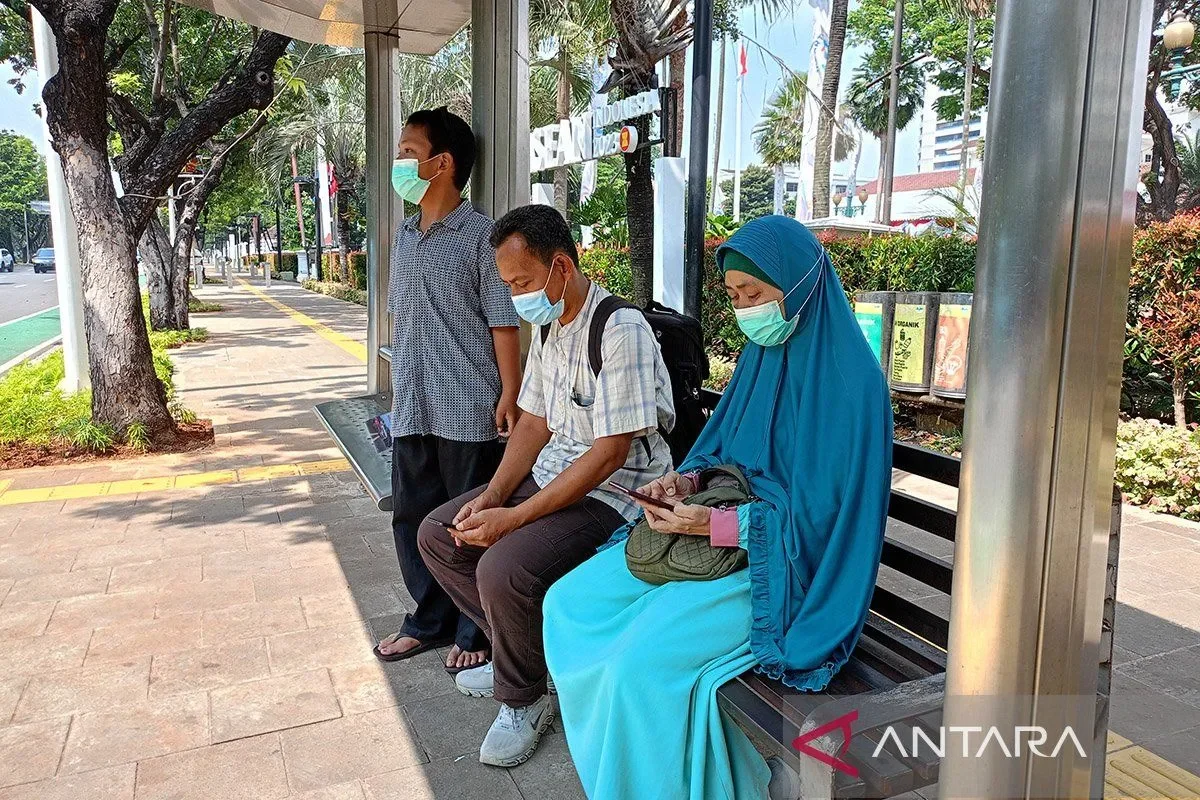
RRI.CO.ID, Jakarta - Jakarta began its Friday morning, June 5, 2026, ranked among the most polluted cities on the planet, with air quality readings placing the Indonesian capital second only to Kinshasa in the Democratic Republic of Congo on a global index. This serves as a grim reminder of the seasonal crisis that returns each year with the dry months.
As reported by Antara, data from air quality monitoring platform IQAir recorded Jakarta's Air Quality Index (AQI) at 172 as of 06:17 Western Indonesia Time on Friday, June 5, 2026, placing it firmly in the unhealthy category. The reading was driven by PM2.5 particulate matter concentration at 95 micrograms per cubic meter, nearly double the threshold that begins to affect sensitive groups.
At that level, the air poses risks not only to people with respiratory or cardiovascular conditions, but also to sensitive animal species, vegetation, and even aesthetic environmental values. IQAir advised Jakarta residents to avoid outdoor activities altogether, wear masks if venturing outside, and keep windows shut to block out contaminated air.
Jakarta's 172 AQI trailed only Kinshasa, which topped the global ranking at 179. Behind Jakarta, Kathmandu, Nepal came in third at 140, followed by Wuhan, China at 137, and Kampala, Uganda at 128.
For context, air quality is considered good when PM2.5 readings fall between 0 and 50, posing no health risks to humans, animals, or plant life. The moderate range of 51 to 100 begins to affect sensitive vegetation and aesthetic values, though human and animal health remains largely unaffected.
Readings between 200 and 299 are classified as very unhealthy, while anything from 300 to 500 is deemed hazardous, capable of causing serious health consequences across the general population.
The alarming Friday morning reading comes as Jakarta's provincial administration braces for the annual dry season, predicted to run from early May through August, when pollution levels historically surge. Authorities say they are preparing a rapid response, including upgrades to the city's air quality monitoring network and tighter motor vehicle emission testing.
The provincial administration is also currently reviewing its Air Pollution Control Strategy, known by its Indonesian acronym SPPU. This evaluation covers multiple dimensions, from PM2.5 trends and sector-by-sector emission loads to the broader public health impact.
Officials acknowledged that tackling Jakarta's air pollution cannot be solved by any single administrative area acting alone. Effective action, they stressed, requires integrated coordination across regional agencies as well as cross-boundary collaboration with surrounding areas. ***
News Recomendation
Memuat berita terbaru.....