



Study Reveals Whale Shark Migration Spans 13 Countries and High Seas
- 04 Mei 2026 09:54 WIB
- Voice of Indonesia
Poin Utama
- A 10-year study shows whale sharks migrate across 13 countries, using oceans as interconnected “natural highways.”
- The findings highlight the urgent need for international cooperation to protect migratory marine species beyond national waters.
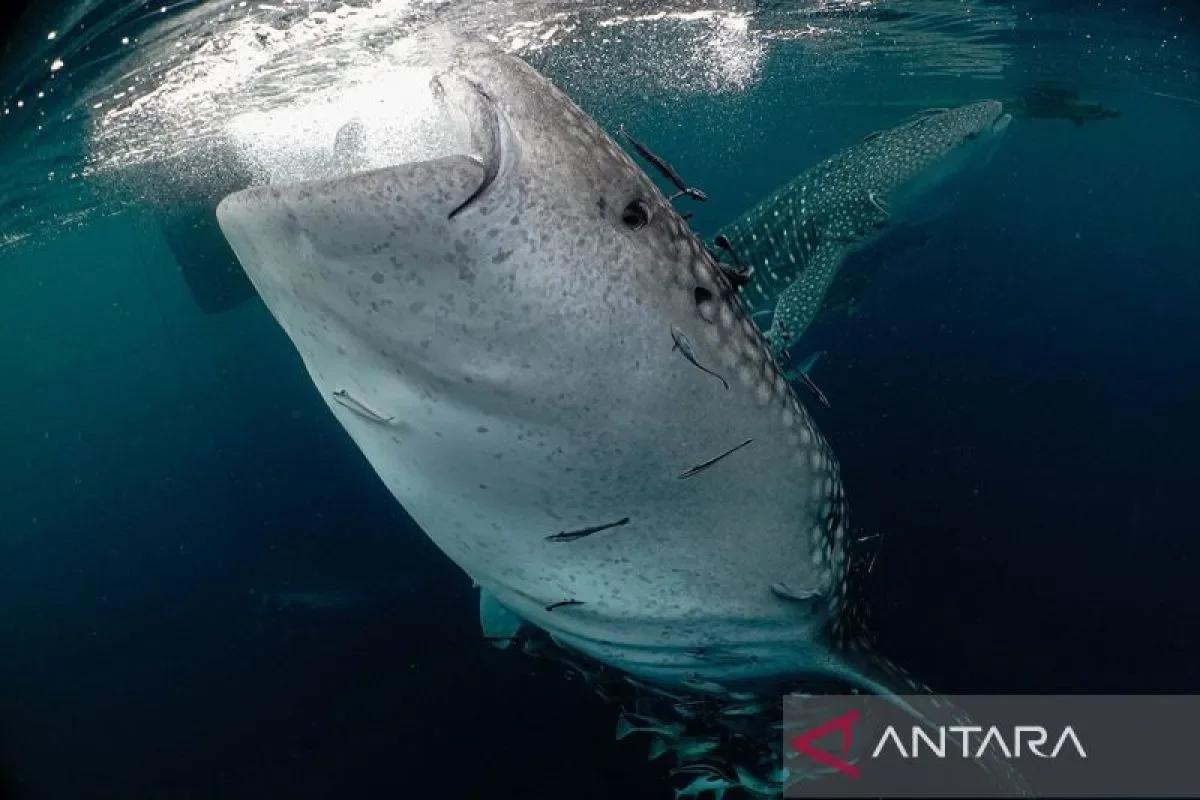
RRI.CO.ID, Jakarta - A decadelong study (2015–2025) conducted by a cross-institutional team of Indonesian researchers has revealed that whale sharks (Rhincodon typus) are far more migratory than previously understood, crossing into 13 different countries and vast areas of the high seas.
The research team, comprising experts from Indonesian Conservation, Elasmobranch Institute Indonesia, Universitas Indonesia, Universitas Diponegoro, and Conservation International, analyzed satellite tracking data from 70 whale sharks across four major Indonesian aggregation sites: Cenderawasih Bay (Central Papua), Kaimana (West Papua), Saleh Bay (West Nusa Tenggara), and Tomini Bay (Gorontalo).
"Now we not only know where whale sharks appear, but also how they move and what factors drive their movement," said Focal Species Conservation Senior Manager at Indonesian Conservation, Iqbal Herwata, on Saturday, May 2, 2026, as quoted by Antara.
The study suggests that whale shark conservation must shift from site-based management to a connected ecosystem approach. Findings indicate that these gentle giants utilize the ocean's dynamics like a network of natural highways.
The study identifies several critical aspects of whale shark behavior, noting that stable habitats like Cenderawasih Bay and Saleh Bay act as irreplaceable key habitats where food remains available for the animals year-round. Beyond these zones, migration corridors consisting of open waters and the high seas serve as essential pathways where the sharks feed opportunistically while traveling between various coastal regions.
Furthermore, their movements are heavily influenced by environmental drivers, with ocean currents and water productivity dictating their routes and identifying specific areas that function as vital "rest stops" for feeding.
Because whale sharks traverse the jurisdictions of 13 nations, including Australia, Timor-Leste, the Philippines, Guam, Papua New Guinea, and several Pacific Island nations, their survival depends on regional diplomacy. Indonesia, acting as a central hub for these migrations in the Indo-Pacific, is uniquely positioned to lead this cross-border conservation effort.
Anindya Wirasatriya from Universitas Diponegoro highlighted that most of the areas these sharks traverse currently fall outside of protected zones, leaving them vulnerable to several critical threats. This lack of oversight significantly increases the risk of bycatch, where the animals are accidentally captured in commercial fishing gear.
Additionally, the sharks face the danger of ship strikes due to frequent collisions with vessel traffic in busy maritime lanes. The absence of comprehensive management underscores the problem of unregulated tourism, which creates an urgent need for sustainable guidelines to prevent habitat disruption and ensure the species' safety.
The researchers conclude that spatial data from this study should be used to design more effective mitigation strategies, such as regulating shipping lanes and enhancing regional protection policies, to ensure the long-term survival of this iconic species. ***
News Recomendation
Memuat berita terbaru.....