



Rare Giant Corpse Flower Blooms in Agam, Drawing Global Tourists to West Sumatra
- 05 Apr 2026 23:46 WIB
- Voice of Indonesia
Poin Utama
- The rare Amorphophallus titanum has bloomed in Agam, West Sumatra, attracting international tourists.
- The Amorphophallus titanum typically requires three to five years between flowering cycles.
- For many travelers, the encounter is a once-in-a-lifetime experience.
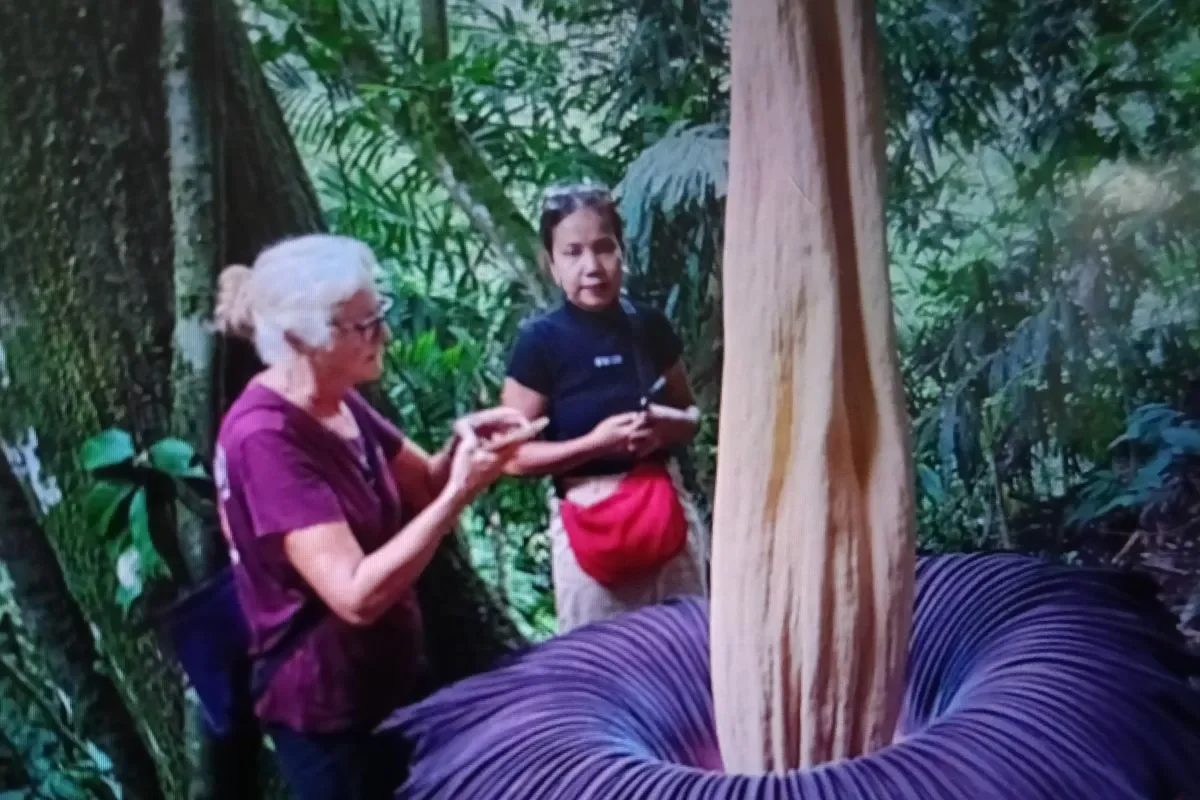
RRI.CO.ID, Lubuk Basung - The rare and majestic Amorphophallus titanum, commonly known as the Titan Arum or corpse flower, has reached full bloom in Koto Rantang, Agam Regency, turning the quiet hills of West Sumatra into a temporary magnet for international travelers.
The bloom, located within a community plantation in Batang Palupuh, Palupuh District, was confirmed to be at its peak on Sunday, offering a fleeting window for nature enthusiasts to witness one of the world's largest floral spectacles.
Palupuh tourism activist Joni Hartono noted that the flower's arrival has sparked a significant influx of foreign visitors. "The flower is in a state of perfect bloom, and in the next few days, it will wither and decay," Hartono said on Sunday, March 5, 2026, as quoted by Antara.
The rarity of the event has drawn a diverse group of international tourists to the site. According to Hartono, dozens of visitors from Malaysia, Russia, and France have trekked to the location to catch a glimpse of the giant flower.
This follows a previous bloom of the same species in the nearby Padang Hijau area in late March 2026, which attracted travelers from the Czech Republic, Slovenia, the United Kingdom, and the United States.
For many travelers, the encounter is a once-in-a-lifetime experience. The Amorphophallus titanum typically requires three to five years between flowering cycles, and the bloom itself lasts only a few days before the plant goes dormant.
"There were dozens of tourists visiting the two locations where the corpse flowers bloomed after I promoted them to travel agencies, hotels, and other outlets," Hartono added.
Head of the Maninjau Conservation Area Resort II at the West Sumatra Natural Resources Conservation Agency (BKSDA), Ade Putra confirmed the specimen as a protected species. He reminded the public that the plant is strictly governed by national law.
"The flower is protected by the law and must not be damaged," Putra stated, referring to Law No. 5/1990, as amended by Law No. 32/2024 concerning the Conservation of Living Natural Resources and their Ecosystems.
As the bloom begins its rapid transition toward decay, local authorities and tourism activists continue to monitor the site to ensure both the safety of the visitors and the preservation of the endemic Sumatran plant. ***
News Recomendation
Memuat berita terbaru.....