



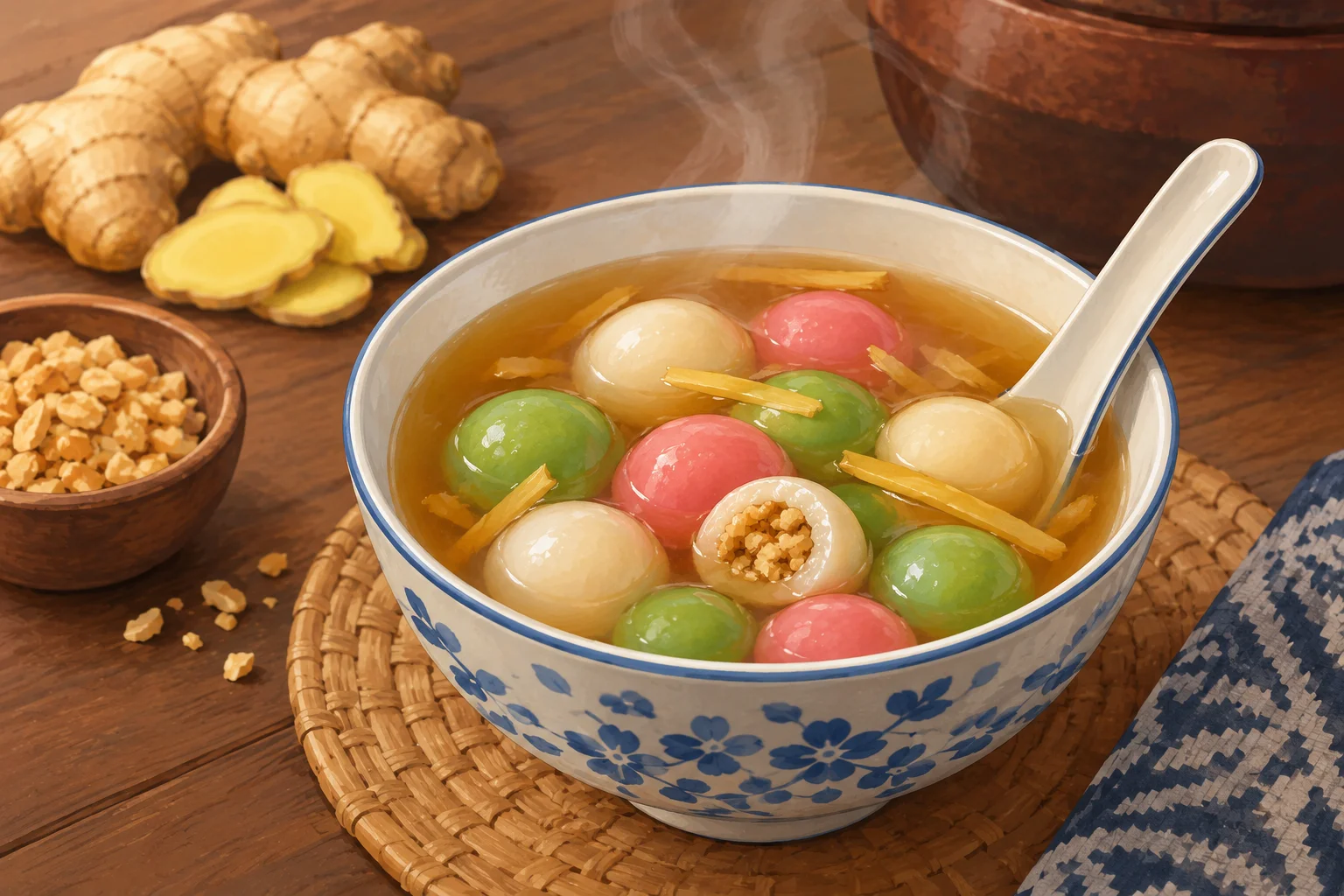
RRI.CO.ID, Jakarta – As the evening air begins to cool, a bowl of wedang ronde can be a comforting way to warm up. This traditional Indonesian drink is made with ginger broth and chewy glutinous rice balls, which are commonly filled with crushed peanuts and served in a sweet, warm soup.
Recognizable by its colorful, round-shaped rice balls, wedang ronde is a familiar part of Indonesia’s traditional culinary heritage. Behind its simple appearance, however, the drink reflects the cultural exchanges that have shaped Indonesian cuisine over generations.
According to ANTARA, ronde is part of Chinese culinary heritage that developed in Indonesia. The word wedang comes from Javanese and refers to a warm drink or water. Meanwhile, ronde is associated with the round shape of the glutinous rice balls that are the drink’s defining feature.
Wedang ronde also carries a message of togetherness. Chef Wira Hardiyansyah said the drink was previously known as Wedang Guyub. In Javanese, guyub refers to harmony, closeness, and a sense of togetherness. The round shape of the rice balls is also associated with friendship and unity.
The cultural meaning can also be seen in the colors of the rice balls. Ronde may come in several colors, each carrying its own symbolism. Red is associated with courage, green with blessings, and white with a pure heart. Ginger represents warmth, while the sweetness of the drink is associated with blessings and prosperity.
Over time, wedang ronde has developed into various versions. Some feature plain rice balls, while others are filled with peanuts or other sweet ingredients. The broth may also combine ginger with palm sugar or other local ingredients, depending on regional traditions and preferences.
Today, wedang ronde remains a familiar sight, particularly in the evening. Its warm ginger broth and chewy rice balls make it a comforting choice when the weather turns cool.
For Indonesians, wedang ronde offers more than a warm drink. It is also an example of how different cultural influences can blend with local traditions and become part of Indonesia’s rich culinary heritage.
News Recomendation
Memuat berita terbaru.....