



Jenang Upih Preserves Yogyakarta’s Ancient Market Tradition
- 18 Mei 2026 14:41 WIB
- Voice of Indonesia
Poin Utama
- Jenang Upih is a rare savory rice cake from Yogyakarta wrapped in dried areca palm fronds.
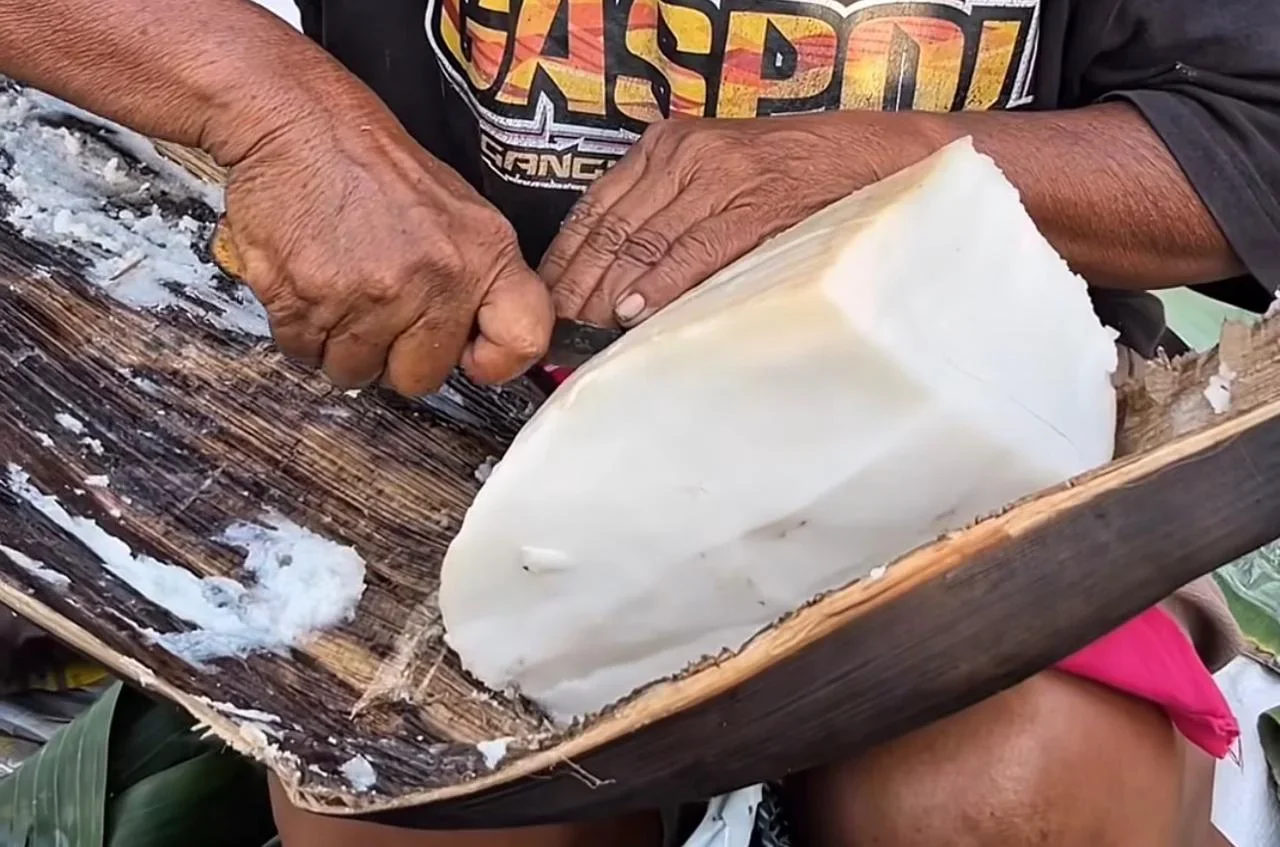
RRI.CO.ID, Sleman - Driven by a massive wave of nostalgic culinary content across social media platforms, rare Indonesian heritage snacks are experiencing a notable resurgence. Among these revived local treasures is jenang Upih (sometimes spelled jenang upeh), a traditional savory rice cake native to Yogyakarta that remains deeply anchored to the ancestral Javanese calendar system.
Unlike modern street foods available around the clock, authentic jenang Upih follows the strict rhythms of traditional markets. One of its last remaining strongholds is Pasar Ngino, located in Banyuurip, Margoagung, Seyegan Subdistrict, Sleman. Here, artisans do not sell the dish daily, instead, they operate exclusively on the specific Javanese market days of Wage and Legi.
While the word jenang typically evokes images of sweet, sticky, porridge-like confections (such as jenang Sumsum), jenang Upih breaks the mold. It is a strictly savory delicacy crafted from a minimalist base of rice flour, thick coconut milk, and salt.
The mixture is slow-cooked until it thickens into a dense, solid block that can be cleanly sliced, closely resembling the texture of gendar (traditional pressed rice cake). This firm structure is achieved through its unique preparation method: the warm mixture is packed and molded inside the dried frond or bark of the areca palm tree, locally known as Upih.
The organic wrapping imparts a subtle, earthy aroma to the cake while serving as a fully biodegradable container.
To create the quintessential Yogyakarta breakfast experience, a portion of jenang Upih is sliced and served alongside sweet braised, spiced tofu and tempeh. The rich, salty creaminess of the rice cake perfectly balances the deep palm sugar glaze of the bacem, making it a highly sought-after morning meal.
Because it caters primarily to local communities and morning commuters, vendors open their stalls as early as 05.30 a.m. Lines form rapidly, and the delicacy routinely sells out long before noon.
Fortunately, budget conscious food travelers do not need to spend heavily to taste this culinary history. A standard portion of jenang upih paired with bacem is priced affordably between IDR 5,000 (USD 0.28) and IDR 10,000, depending on the number of side dishes chosen.
For those tracking down this elusive dish across the Yogyakarta region, jenang Upih can still be unraveled at select heritage locations, starting with Pasar Ngino in Sleman, where it is available strictly on Wage and Legi market days.
It can also be found at Pasar Godean, a bustling regional market located in western Sleman, as well as Pasar Kranggan, in Yogyakarta City, which is conveniently situated near the iconic Tugu monument in downtown Yogyakarta. Additionally, the Cibuk Kidul Production Center serves as a dedicated local cluster actively preserving these traditional snack-making practices. (Naura Sofia/EN)
News Recomendation
Memuat berita terbaru.....