



OJK Sees Room for JCI Recovery After 29 Percent Year-To-Date Drop
- 06 Okt 2026 22:59 WIB
- Voice of Indonesia
Poin Utama
- OJK sees room for a JCI rebound after a 29.24 percent year-to-date decline.
- Global uncertainty and domestic reforms remain key factors shaping investor confidence.
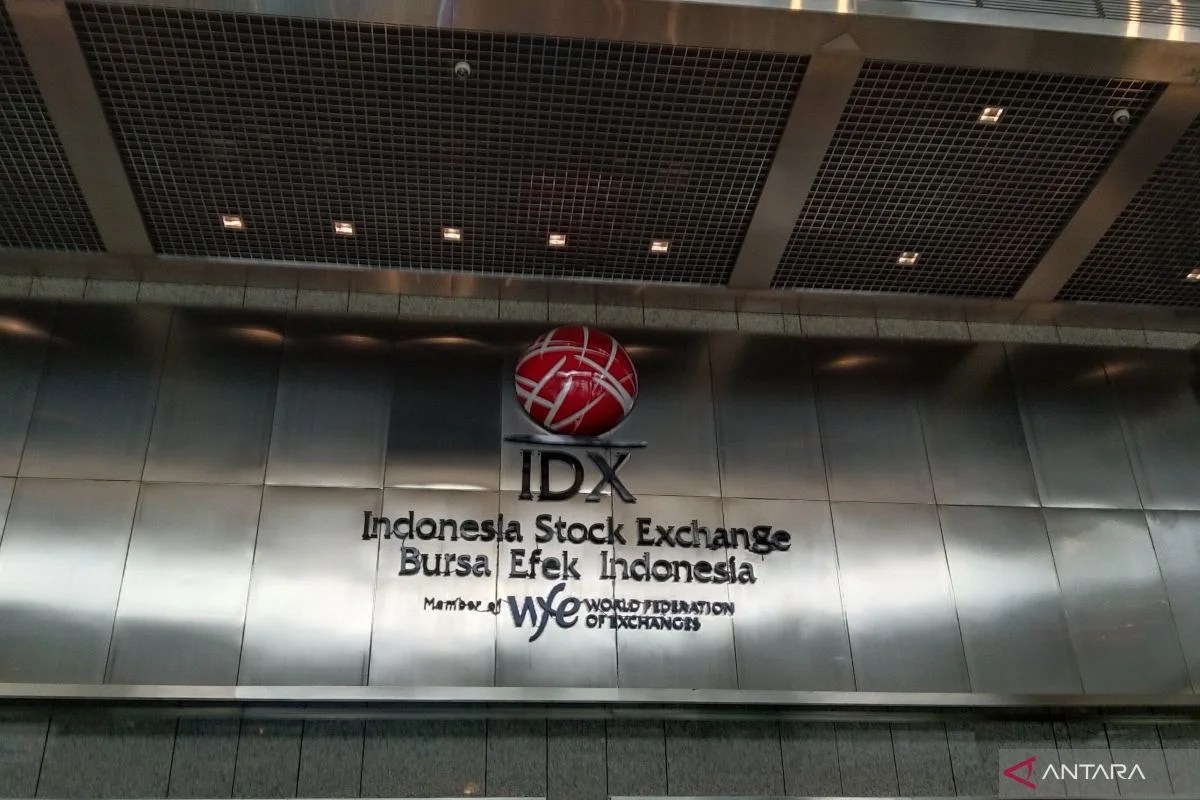
RRI.CO.ID, Jakarta – The Indonesian Financial Services Authority (OJK) is optimistic that the Jakarta Composite Index (JCI) will bounce back soon after facing pressure throughout the first three quarters of 2026. This pressure stemmed from a combination of global and domestic factors that influenced Indonesia’s capital market.
The JCI has declined 2,528.08 points, or 29.24 percent year-to-date (ytd), to 6,118.86 as of Monday, October 5, down from 8,646.94 on December 30, 2025. Nevertheless, the OJK believes that the resilience of the national capital market still provides room for the JCI to recover.
Chief Executive of Capital Market, Derivatives, and Carbon Exchange Supervision at the OJK, Hasan Fawzi, said that the OJK remains optimistic about the prospects for a recovery in the domestic market.
“Although its movements will still be influenced by various global dynamics as well as the fundamental performance of issuers on the Indonesia Stock Exchange (IDX),” said Hasan during an online press conference on the results of the OJK’s September 2026 Monthly Board of Commissioners Meeting (RDKB) on Monday, October 5, 2026.
This optimism is evident in the JCI’s movement, which has begun to enter a recovery phase after hitting a low of 5,342.14 on June 8. According to Hasan, the index’s rebound from that low indicates room for market recovery.
In line with this, the OJK, together with Self-Regulatory Organizations (SROs), market participants, and stakeholders, continues to strengthen transparency and governance. These measures are being taken to enhance investor protection in the Indonesian capital market.
The OJK is also continuing to deepen the market to boost the confidence of both local and foreign investors, including retail and institutional investors. “The OJK will also continue to ensure that the integrity and investability of our capital market are maintained so that the market can grow sustainably over time,” said Hasan.
Globally, pressure on the JCI is driven by geopolitical uncertainty, which disrupts commodity distribution and raises prices. These conditions subsequently impact inflation and have the potential to slow global economic growth.
Rising inflation is also fueling expectations that global policy rates will remain higher for longer. These tight monetary conditions are also influencing the dynamics of global financial markets.
“This has been one of the factors putting pressure on the rupiah. Additionally, adjustments to investment strategies by investors--particularly foreign investors--have also influenced the market throughout 2026,” he said.
Domestically, global investors are focusing on Indonesia’s capital market policy reforms and their implementation throughout 2026. Assessments by global index providers are also a key consideration influencing investment decisions and strategies in the Indonesian capital market.
Amid these various pressures, the JCI closed Monday’s trading session up 81.97 points, or 1.36 percent, at 6,118.86. Meanwhile, the LQ45 blue-chip index rose 7.77 points, or 1.30 percent, to 603.23.
Stock trading frequency reached 1.64 million transactions with a volume of 40.24 billion shares worth IDR 9.96 trillion USD 556.25 million). A total of 547 stocks rose, 164 stocks fell, and 252 stocks remained unchanged. (Gusti Panji-EN)
News Recomendation
Memuat berita terbaru.....