



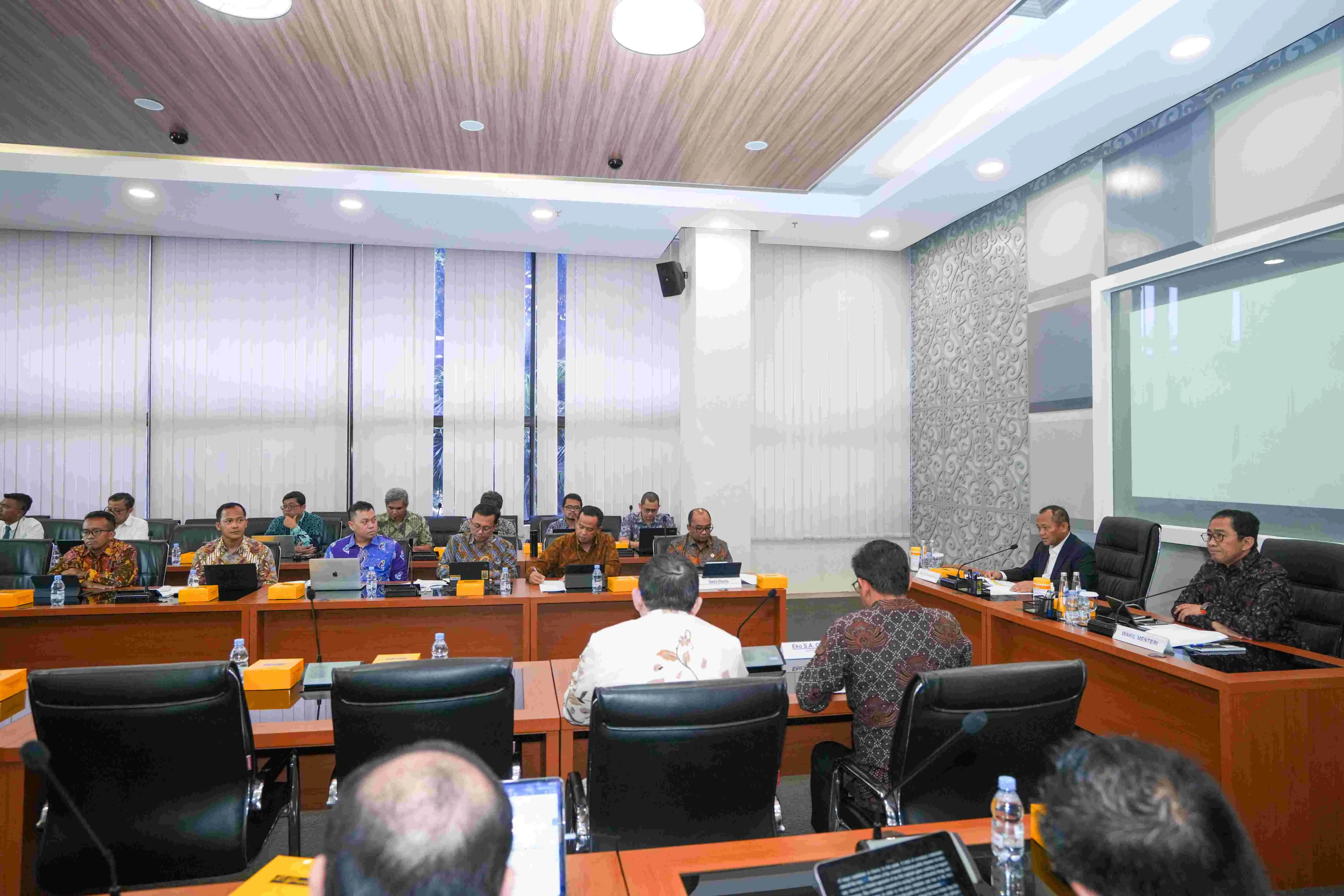
RRI.CO.ID, Jakarta - Industry Minister Muhammad Sarmuji, highlighted the importance of refining import policies to support the sustainability of domestic manufacturing. He stressed that an unrestricted import licensing policy without considering domestic production capacity could make it increasingly difficult for national industries to remain competitive.
“For example, if import licenses are opened too widely without considering the need for restrictions, domestic industries will certainly find it difficult to survive in certain product segments. That is why we need to work together with many stakeholders,” Industry Minister Muhammad Sarmuji said in Jakarta on Monday, October 5, 2026, as quoted in an official statement.
Sarmuji emphasized that the Ministry of Industry needs to play a stronger role as a driver and accelerator of national industrial growth. All Ministry of Industry officials are encouraged to develop strategic measures and breakthroughs that have a tangible impact on industrial performance, rather than focusing solely on routine duties and functions.
“The Ministry of Industry must serve as an accelerator for the industries under its mandate. We need to take major steps across all sectors so that these industries can grow faster,” he said.
According to him, major measures are needed to ensure that the industrial sector can make a greater contribution to the national economy. The industry also plays an important role in creating added value while generating large numbers of jobs.
“If industrial growth is not strong, it will be difficult to achieve higher economic growth. Moreover, in terms of employment, the industrial sector is capable of absorbing a large workforce,” he added.
Sarmuji therefore called on all Ministry of Industry officials to actively identify issues that are hindering growth in each industrial subsector. Such mapping is needed not only to assess the condition of each industry but also to provide a basis for developing policies and programs that address the needs of businesses.
As part of the process, Sarmuji also opened broader channels of communication within the Ministry of Industry. He said information and input should not come solely from senior officials at the first echelon, but could also be provided by second-echelon officials and other staff who have direct knowledge of technical issues on the ground.
“I am open to receiving input even from second-echelon officials. I will welcome it, while we will of course continue to respect the bureaucratic hierarchy,” he said.
The Minister further said greater openness to information from across organizational levels is important to obtain a more comprehensive picture of industrial challenges. Some information may not be fully captured at the first-echelon level but may be known in greater detail by officials working directly with industrial sectors.
“Gathering information from the lower levels and giving me access to that information is also very important. There may be information that has not been fully captured at the first-echelon level but can be provided by officials at lower levels. We are also very open to receiving information from outside the ministry,” Sarmuji said.
News Recomendation
Memuat berita terbaru.....