



Indonesia Needs Up to USD 126 Billion in Investment to Achieve 6 Percent Growth
- 05 Okt 2026 21:18 WIB
- Voice of Indonesia
Poin Utama
- Indonesia needs up to IDR 2,258 trillion in investment to achieve its 6 percent economic growth target by 2027.
- Clean energy, digital infrastructure and mineral downstreaming offer major opportunities for investors.
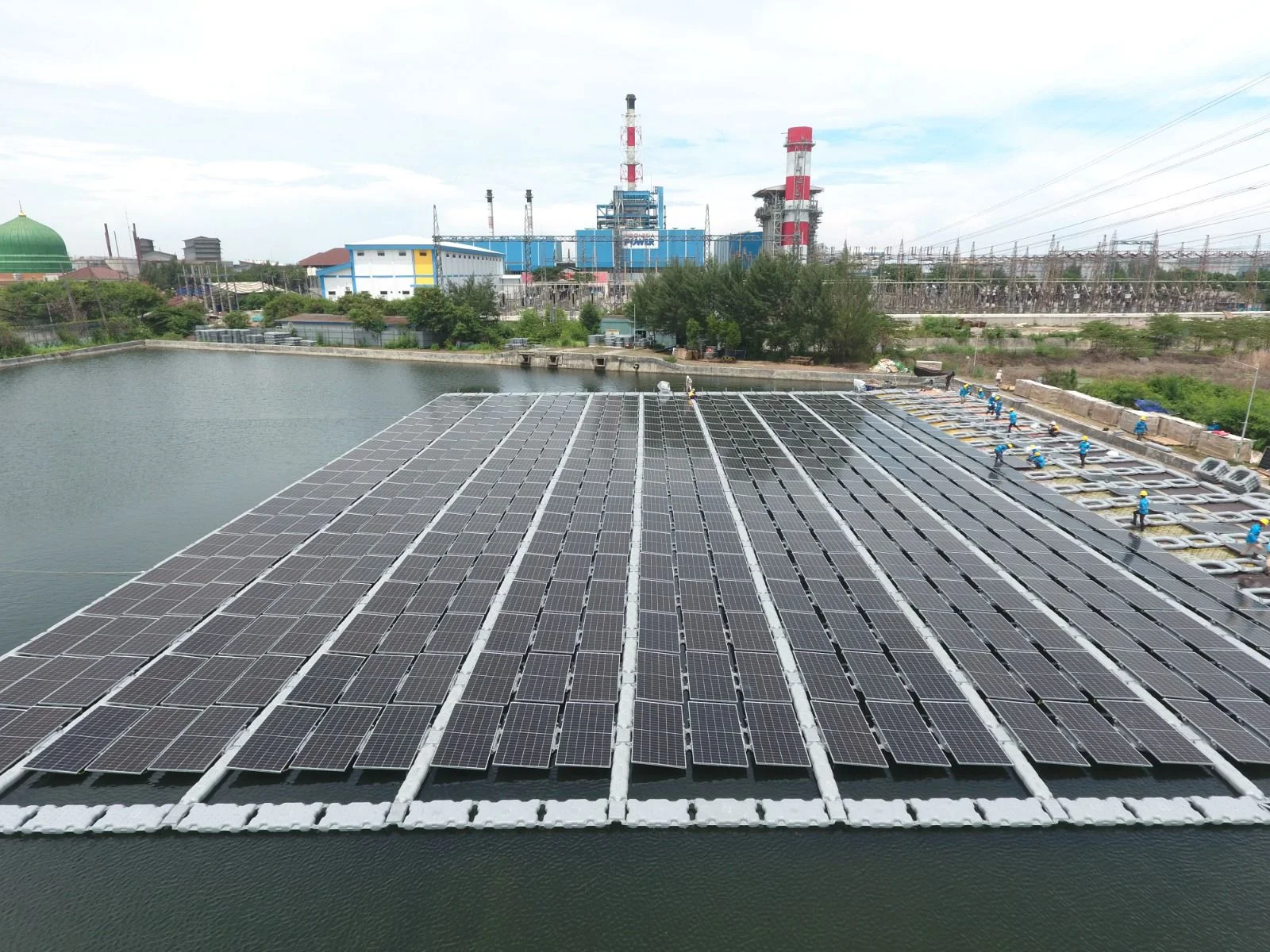
RRI.CO.ID, Jakarta – Indonesia is accelerating the development of green energy and digital infrastructure as twin engines of sustainable economic growth, as the government seeks to maintain positive economic momentum amid global uncertainty.
Indonesia's economy expanded 5.45 percent year-on-year in the first half of 2026, while inflation remained under control at 3.19 percent year-on-year in August. The government views these achievements as an important foundation for boosting productivity and driving economic transformation.
In line with President Prabowo Subianto's Asta Cita development agenda, the transition toward a green economy, blue economy, and stronger food, energy, and water security remains a key driver of national economic growth.
Coordinating Ministry for Economic Affairs spokesperson Haryo Limanseto said the sustainability of the green economy requires strong synergy between clean energy availability and the acceleration of digital infrastructure.
"The government is committed to orchestrating the energy transition and digital development as twin engines of sustainable economic growth. The combined availability of affordable clean energy and the acceleration of digital infrastructure are key to creating a globally competitive investment climate while accelerating the achievement of long-term growth targets," Haryo said in a statement quoted on the ministry's official website.
To achieve the government's target of 6 percent economic growth in 2027, national investment needs to expand by 8 to 9 percent, requiring capital investment of between Rp 2,218 trillion and Rp 2,258 trillion.
Reliable green energy is considered a key prerequisite to meet electricity demand projected to reach 700–800 terawatt-hours (TWh) by 2030, in line with President Prabowo's directive to increase renewable energy-based generation capacity by up to 100 gigawatts (GW) peak.
The energy transition is supported by plans to develop 47,758 circuit kilometers of transmission networks to ensure reliable electricity supplies for industries and data centers.
Meanwhile, the Village Electrification Program, which reached 1,505 locations in 2025, is targeted to expand to 4,390 locations in 2026. The program aims to raise the national electrification ratio to above 99 percent and improve the energy resilience index to 7.13.
Indonesia's strategic mineral resources, including nickel, tin, bauxite, copper, gold, and coal, are also expected to accelerate green economic growth.
Downstream processing programs powered by clean energy are projected to significantly increase added value, particularly through the development of the electric vehicle ecosystem, which could generate up to 67 times more value.
With global demand for electric vehicles projected to reach US$5.91 trillion by 2045, Indonesia's critical mineral reserves and silica sand resources for solar panel production position the country strategically within global supply chains.
The government said this momentum has attracted interest from the European Union, the United States and Canada to collaborate in developing energy transition technologies and diversifying global critical mineral supply chains in Indonesia.
To support financing, the government is promoting green funding schemes such as green bonds, blended finance, the Just Energy Transition Partnership (JETP) and the Asia Zero Emission Community (AZEC).
These initiatives are complemented by efforts to improve workforce quality through expanded university graduate internship and vocational training programs to meet the needs of green industries.
"The integrated optimization of green energy potential and digitalization represents a golden moment for Indonesia to strengthen its position as an energy hub and a key player in the global energy transition. Through innovative financing schemes and the development of a skilled workforce, the government is optimistic that the green economy can accelerate the achievement of net-zero emissions targets while creating new quality jobs," Haryo said. ***
News Recomendation
Memuat berita terbaru.....