



Reihani Transforms Batak-Malay Weaving into Modern Fashion
- 04 Okt 2026 13:03 WIB
- Voice of Indonesia
Poin Utama
- MSME Rehani Batak Malay Woven and Batik transforms traditional textiles into modern fashion products, including clothing and accessories.
- Local artisans combine traditional weaving techniques with contemporary designs to meet current market needs.
- Batak-Malay woven products are handcrafted by artisans while preserving traditional values and craftsmanship quality.
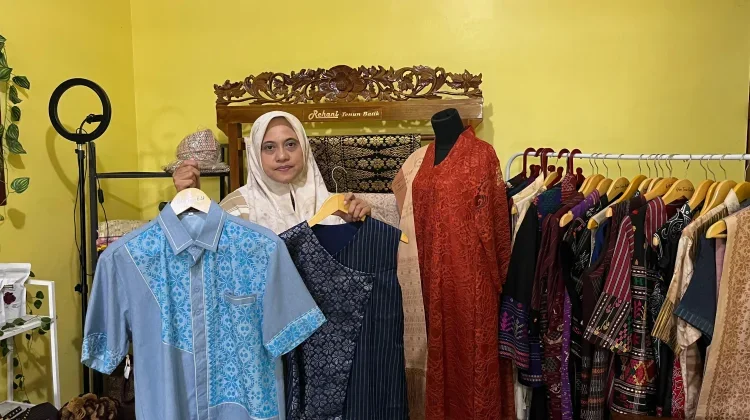
RRI.CO.ID, Jakarta - In the hands of artisans, a single thread does not stop at becoming fabric, it can be transformed into clothing and accessories. The MSME Rehani Tenun Batik Batak Melayu turns traditional weaving into fashion products that meet modern needs.
Owner Tin Reihani has been developing the business since 2014, producing Batak and Malay woven fabrics into clothing, souvenirs, and other derivative products.
“We produce weaving from a single thread into fabric, then process it into fashion items such as clothes, bags, wallets, and accessories. I have been pursuing this business since 2014,” she said in an interview with Pro3 RRI, Jakarta, Saturday, October 3, 2026.
Based in Medan, the business initially employed only one person, Reihani’s neighbor. “Now there are 12 people helping with production,” she explained.
Today, Reihani involves housewives as weavers, providing training until they are able to work independently. Before starting her business, she herself joined weaving workshops and later studied under a teacher who continues to assist her.
She noted that the time required to produce a single piece of fabric depends on the complexity of the motif. Simple designs take about four to five days, while intricate patterns can take up to two weeks.
Reihani uses a variety of threads, including silk, cotton, rayon, and polyester. Silk and cotton are more complex to work with and command higher prices. “There are many types of threads -- silk, cotton, rayon, polyester. Cotton and silk are more expensive than rayon or polyester,” she said.
In addition to Malay motifs, she also develops Batak-inspired designs. Using non‑mechanical looms (ATBM), production can be completed in two to three days, while traditional waist‑tied looms (gedokan) may take up to two weeks.
“To use ATBM, it can be finished in two or three days. But with gedokan, tied at the waist, it can take up to two weeks,” she explained.
She also modifies traditional fabrics to suit everyday fashion needs, for example, combining plain cloth with silk to avoid monotony. Products can be customized according to customer motifs and models, with prices ranging from IDR 300,000 to IDR 3 million (USD 17 to USD 168). (Diffa Sephiawardhani)
News Recomendation
Memuat berita terbaru.....