



Bank Indonesia Says 30 Percent Spot Intervention Ratio Is Not a Fixed Target
- 01 Okt 2026 01:08 WIB
- Voice of Indonesia
Poin Utama
- Bank Indonesia said its spot interventions in the foreign exchange market remain flexible and are guided by market dynamics.
- Foreign exchange reserves reached USD 146.5 billion at the end of August, supporting BI's rupiah stabilization efforts.
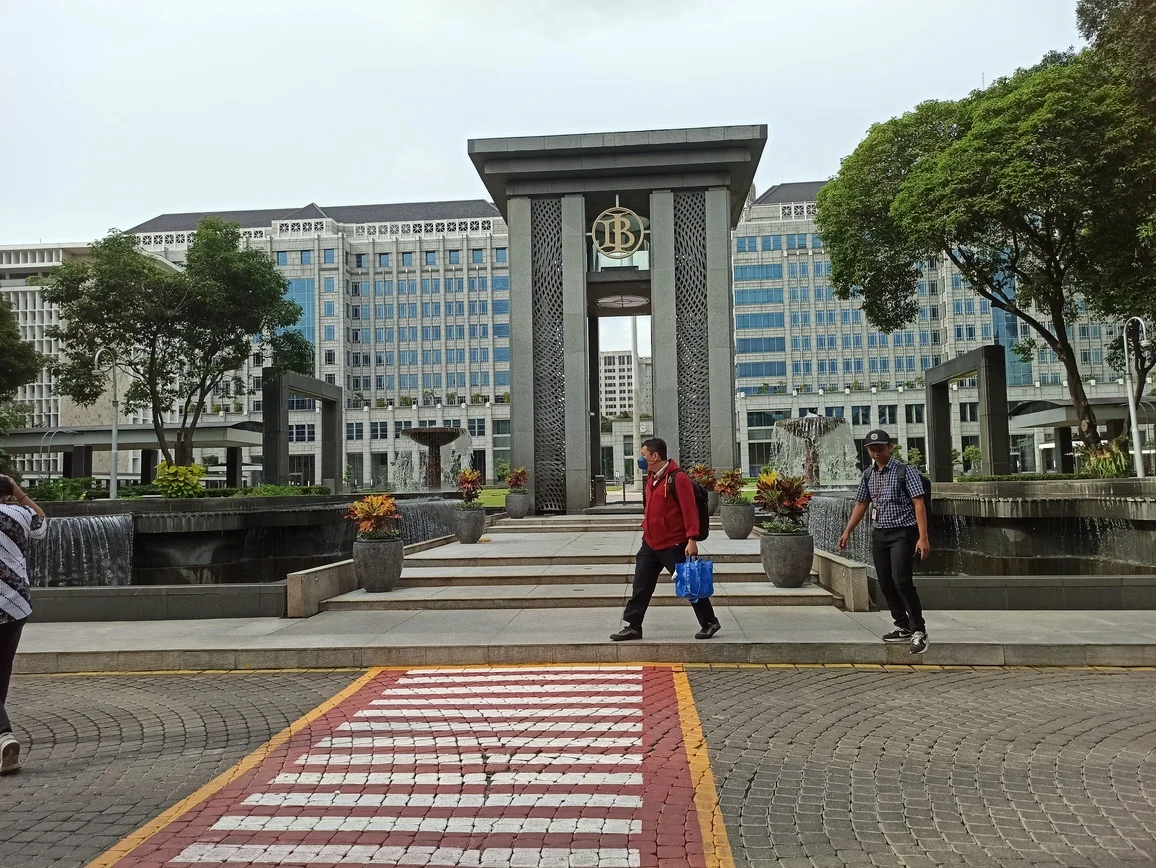
RRI.CO.ID, Jakarta – Bank Indonesia (BI) emphasized that its spot interventions in the foreign exchange market to maintain rupiah stability continue to be carried out in line with market dynamics.
Executive Director of Monetary and Securities Asset Management at BI, Erwin G. Hutapea, said the spot intervention composition of around 30 percent, which was mentioned during a recent hearing with the House of Representatives' Commission XI, was a historical figure and not a target for intervention operations.
"If spot demand is high and the market is unable to match supply and demand in line with market forces, Bank Indonesia, as the authority responsible for maintaining stability, will certainly step in to safeguard exchange rate stability," Erwin said during a media briefing in Jakarta on Wednesday, Sept. 30, 2026, as quoted by Antara.
Erwin added that BI's commitment to maintaining exchange rate stability remains strong, supported by adequate foreign exchange reserves.
Foreign exchange reserves stood at USD 146.5 billion at the end of August 2026, up from USD 145.3 billion at the end of July 2026.
"Operationally, no one should conclude that Bank Indonesia will reduce spot interventions. We remain committed to maintaining stability through our mix of interventions, whether in the spot market, Domestic Non-Deliverable Forwards (DNDFs), or Non-Deliverable Forwards (NDFs), in response to prevailing market dynamics," he said.
Erwin explained that, as part of efforts to deepen the market and better match supply and demand, BI continues to encourage foreign exchange transactions in the domestic market not to be conducted entirely through cash or spot transactions.
If foreign exchange needs are not urgent, BI encourages market participants to meet them through hedging mechanisms. According to Erwin, this is intended to make foreign exchange demand in the domestic market more orderly.
Historically, as BI has promoted the development of the domestic foreign exchange market, the use of spot, NDF, and DNDF instruments has become more balanced. However, he stressed that this does not mean BI's commitment to intervening in the spot market has diminished.
"Bank Indonesia's operations through these three instruments to maintain exchange rate stability are always responsive to prevailing developments and market dynamics," Erwin said.
According to Erwin, the desired outcome is a deeper domestic foreign exchange market in which the composition of cash and hedging instruments becomes more balanced.
A deep foreign exchange market is not only characterized by the development of the spot market, but also by the growth of forward, swap and DNDF markets. This is in line with the direction of financial market development outlined in the Blueprint for Money Market Deepening.
More broadly, Erwin said a country's currency movements are influenced by both global and domestic factors, whether driven by market sentiment or actual demand.
Market sentiment can prompt participants to take positions, which are then reflected in changes in supply and demand in the foreign exchange market.
In addition, fundamental factors such as interest rates, inflation, energy prices and fiscal conditions can influence investor perceptions and drive portfolio reallocations.
"So, exchange rate depreciation is not driven solely by supply and demand arising from domestic foreign exchange needs. Price dynamics and market perceptions also play a role," Erwin said.
Given that global factors cannot be controlled, BI and the government are working to maintain conducive domestic conditions to mitigate negative sentiment. At the same time, BI continues to respond to global developments through policy measures and a mix of foreign exchange market interventions. ***
News Recomendation
Memuat berita terbaru.....