



Bank Indonesia Pushes for a More Integrated Payment Ecosystem
- 28 Sep 2026 22:05 WIB
- Voice of Indonesia
Poin Utama
- Indonesia's digital payments are growing rapidly. QRIS merchants approach 50 million, and transactions across payment service providers are increasing.
- Bank Indonesia is shifting its focus to strengthening trust and integrity, including enhancing the fraud detection capabilities of payment service providers as the digital payment ecosystem becomes more integrated.
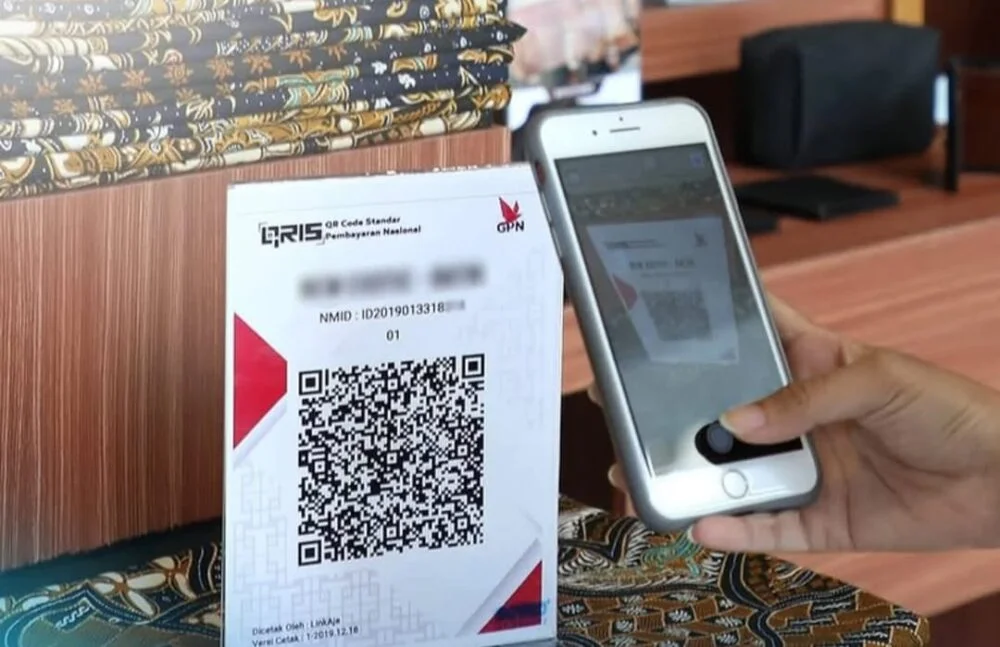
RRI.CO.ID, Jakarta - The development of digital payments in Indonesia continues to show improvement. QRIS is being used more widely. Transactions across payment service providers are increasing. The payment system ecosystem is more integrated. In line with these developments, Bank Indonesia (BI) is now focusing on strengthening public trust and the integrity of the payment system through the Indonesian Payment Systems Blueprint (BSPI) 2030.
Director-Head of the BI Data Innovation and Digitalization Policy and Strategy Group, Agung Bayu Purwoko, stated that BSPI 2030 is a continuation of BSPI 2025.
"While the previous period emphasized expanding inclusion, the BSPI 2030 phase is aimed at maintaining public trust amidst the increasing digitalization of payments. With what? Through our initiatives related to integrity," Agung said in a Focus Group Discussion (FGD) in Jakarta on Monday, September 28, 2026.
According to Agung, previous developments in the payment system successfully encouraged collaboration between the Bank Indonesia (BI), relevant authorities, and industry players to expand public access to digital payment services. This collaborative approach is necessary to address new challenges, particularly online fraud, which has grown alongside the increasing digitalization of transactions.
Through BSPI 2030, Bank Indonesia is encouraging improvements in the capabilities of payment system service providers, including their ability to detect and prevent fraud.
"Previously, we focused on increasing the number of QRIS merchants and transactions. Going forward, we also want them to improve their fraud detection," he said.
This development is part of the payment system transformation that Bank Indonesia has promoted since 2019. The development of payment systems is fundamentally aimed at supporting economic growth through fast, easy, affordable, secure, and reliable transactions.
Initially, there were fewer than 2 million QRIS merchants in Indonesia. A handful of banks still dominated the payment system ecosystem. Therefore, one of Bank Indonesia's main focuses was to expand the number of merchants and the use of digital payments.
Now, the number of QRIS merchants has grown rapidly to nearly 50 million. This growth has coincided with the development of other payment infrastructures, such as BI-FAST and the National Standard for Open API Payments (SNAP).
According to Agung, these initiatives were developed to improve interoperability among payment system stakeholders. With an interconnected system, people can transact not only within a specific payment service provider's ecosystem but also across them.
"Because at that time, if each player served their own customers, the transactions were always the same. Indonesia is so vast, so it requires mutual cooperation," he said.
This integration is reflected in the increase in off-us transactions, namely transactions involving more than one payment service provider. Agung stated that in 2020, the share of off-us transactions was still around 22 percent. With the development of QRIS and the increasing integration of payment systems, this portion has increased significantly to around 40 percent and is projected to continue growing until 2030.
However, the increasingly connected payment ecosystem also presents new challenges, particularly related to identity and fraud risks. When transactions occur across payment service providers, strengthening security mechanisms is no longer solely the responsibility of each player but requires coordination between parties.
Therefore, Agung emphasized the importance of improving the capabilities of payment system service providers as well as management awareness in maintaining ecosystem integrity.
"So, management must also be aware that the ecosystem is already well-maintained, highly digitalized, and of course, we agree with the aforementioned trust. We already have several mechanisms in place, and they will be strengthened with the support we are currently building," said Agung.
Thus, the direction of Indonesia's payment system development is entering a new phase. After expanding the inclusion and use of digital payment services, the next challenge is ensuring that this increasingly large and integrated ecosystem remains secure, reliable, and able to maintain public trust. ***
News Recomendation
Memuat berita terbaru.....