



Indonesia Pushes Food Industry Toward Higher Global Value
- 19 Sep 2026 00:13 WIB
- Voice of Indonesia
Poin Utama
- Indonesia targets USD 83.08 billion in food and beverage exports by 2029.
- Global expansion hinges on downstreaming, new markets, and stronger product standards.
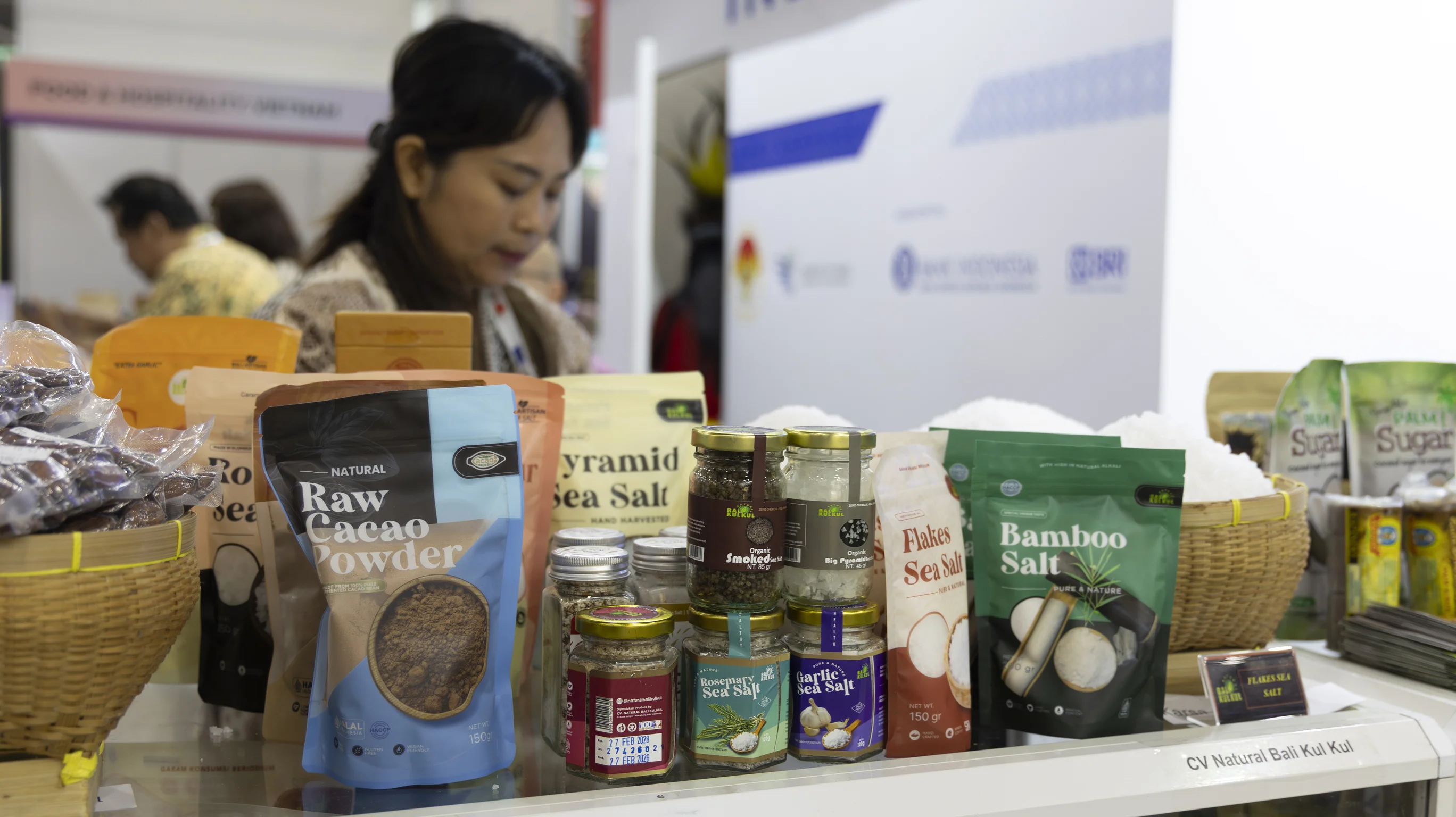
RRI.CO.ID, Jakarta – Indonesia is aiming to expand its food industry into the global market. The Indonesian Ministry of Industry has set a target for food and beverage exports to reach USD 83.08 billion by 2029.
Food industry’s continued strong performance supports this target. In the first half of 2026, food and beverage industry grew by 6.77 percent and accounted for 41.86 percent of the non-oil and gas manufacturing sector's GDP.
“Our manufacturing industry is becoming increasingly robust," said Deputy Minister of Industry, Faisol Riza, during the opening of Food Ingredients Asia (Fi Asia) Indonesia 2026, as quoted on the ministry’s official website in Jakarta on Friday, September 18, 2026.
"In the future, this strength must be translated into value-added, high-quality, innovative, and globally competitive products,” he added.
Food and beverage exports reached USD 49.5 billion in 2025, up 19.5 percent and marking a five-year high. The sector’s trade surplus stood at USD 36.1 billion, while exports in the first half of 2026 totaled USD 24.61 billion with a surplus of USD 17.57 billion.
The ministry is pursuing its 2029 targets through the downstream processing of local raw materials, increasing factory utilization to 70 percent, and penetrating 20 new export markets. Investment in the food and beverage industry in the first half of 2026 totaled IDR 26.82 trillion (USD 1.5 billion).
However, access to global markets is increasingly determined by standards for health, food safety, and sustainability. Acting Director General of Agro-Industry, Putu Juli Ardika, stated that the industry must adapt to changing consumer demands.
“The industry must continue to adapt by offering products that meet consumer needs, including in terms of health, safety, quality, and sustainability,” said Putu.
The ministry has strengthened mandatory SNI standards for several strategic food products, including wheat flour, palm cooking oil, instant coffee, cocoa powder, and refined granulated sugar. “Standards are not only meant to protect consumers but also to boost confidence in Indonesian products and help the industry meet global market requirements,” he said.
Expansion opportunities are also being bolstered through Fi Asia Indonesia 2026. “We are looking to connect Indonesia’s markets and resources with global technology, innovation, and networks,” concluded Putu. ***
News Recomendation
Memuat berita terbaru.....