



Indonesia’s Manufacturing PMI Declines to 49.8 in August 2026
- 02 Sep 2026 17:31 WIB
- Voice of Indonesia
Poin Utama
- The manufacturing Purchasing Managers’ Index (PMI) for August 2026 stood at 49.8, slightly lower than the July level of 50.2.
- The Ministry of Industry will continue ensuring that the business climate and industrial policies support stronger national manufacturing competitiveness.
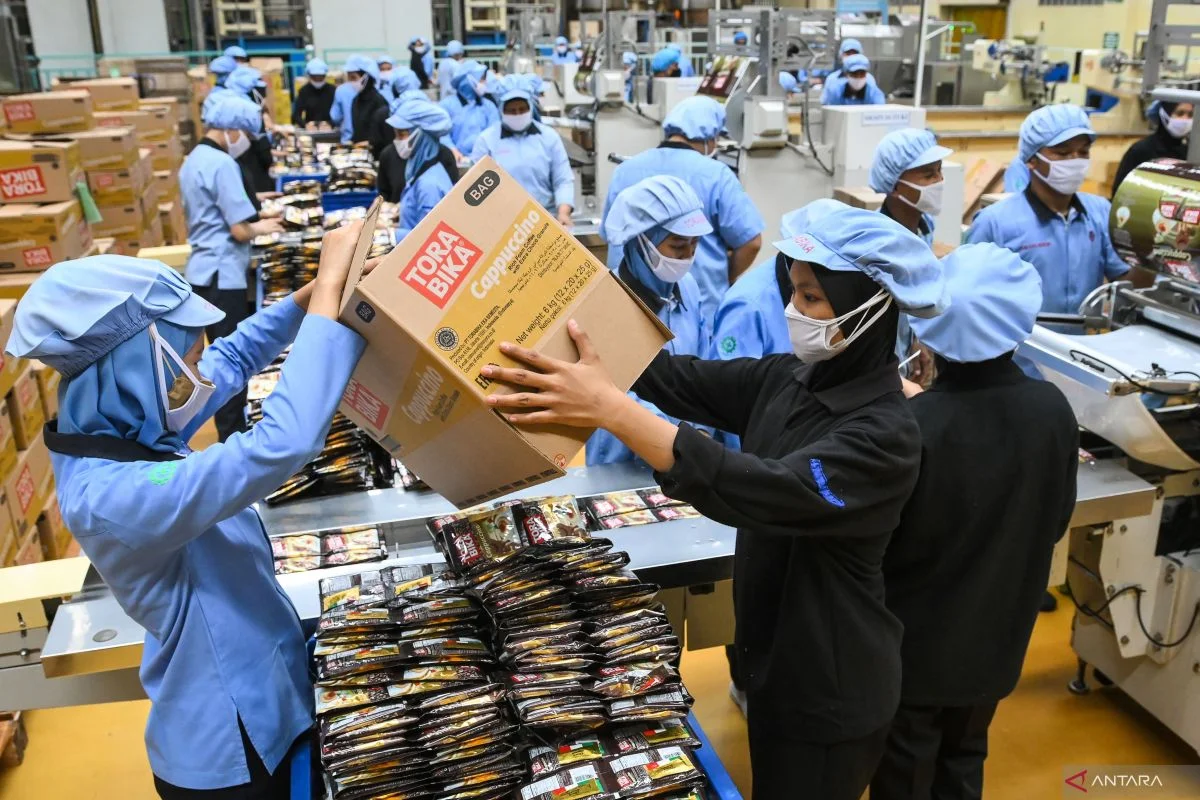
RRI.CO.ID, Jakarta – The manufacturing Purchasing Managers’ Index (PMI) for August 2026 stood at 49.8, slightly lower than the July reading of 50.2, according to Industry Ministry spokesperson Febri Hendri Antoni Arief.
Febri said the August PMI movement was influenced by adjustments in production and labor efficiency, driven by intense competition in the domestic market.
“The manufacturing PMI in August did fall slightly below the 50 level again. However, we also saw a modest increase in new orders and improving business confidence,” he said in a statement in Jakarta on Tuesday, September 1, 2026.
An S&P Global report shows that new orders rose slightly for the first time in three months. Industry optimism also continued to strengthen in August, reaching its highest level in seven months.
“This improvement in confidence serves as an important foundation for the industry to maintain production continuity while capturing increasingly open market opportunities. The ministry will continue ensuring that the business climate and industrial policies support stronger national manufacturing competitiveness,” Febri said.
Surveyed business operators expect demand to strengthen over the next 12 months, while stable market conditions are seen as supportive of higher production.
One of the increasingly significant opportunities for Indonesia’s industry comes from the European Union (EU) market through the signing and ratification of the Indonesia‑EU Comprehensive Economic Partnership Agreement (IEU‑CEPA).
The agreement is a strategic instrument to expand market access for Indonesian products and strengthen domestic competitiveness.
Textiles and apparel, footwear, electronics, and wood and wood‑based products are among the sectors expected to benefit from improved market access. The government is also preparing industry players to meet EU standards, regulations, and consumer preferences.
“We are leveraging reduced import tariffs and the harmonization of quality standards so that our export products can compete more closely with competitors from other European countries,” said Secretary of the Directorate General of Chemical, Pharmaceutical, and Textile Industries, Sri Bimo Pratomo.
Bimo added that the ministry is ready to facilitate guidance on sustainability standards and green certification for industry players in the chemical, pharmaceutical, and textile sectors. This effort aims to ensure that domestically manufactured products meet the EU’s strict regulations.
Meanwhile, Indonesia is also implementing the Technical Considerations (Pertek) policy to balance business continuity and industrial competitiveness. The policy is becoming increasingly important amid global industrial competition.
“At its core, the ministry maintains a balance between supply and demand. For this reason, the Pertek instrument remains necessary to anticipate pressure on demand for domestic industrial products,” he said. (Gusti Panji)
News Recomendation
Memuat berita terbaru.....