



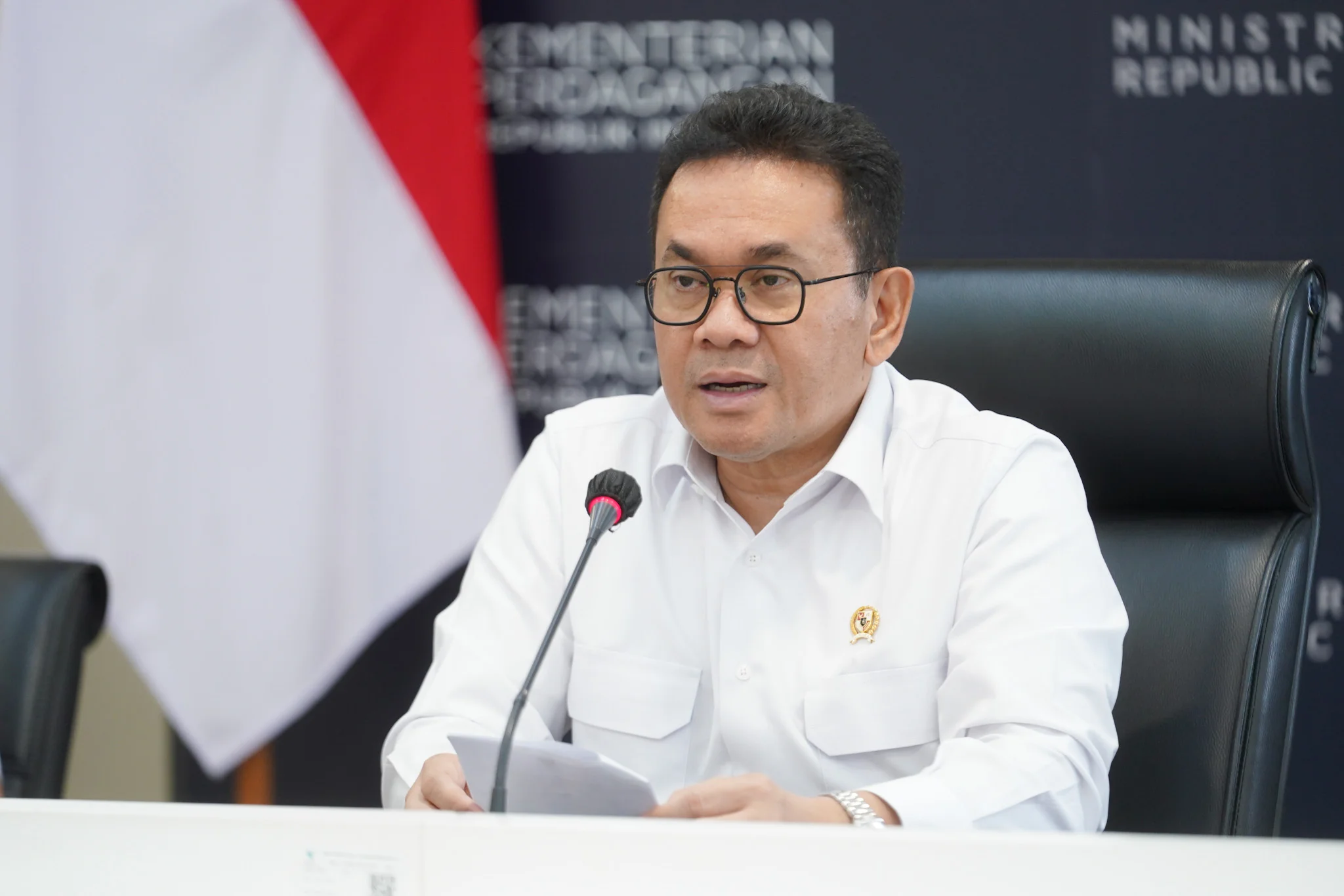
RRI.CO.ID, Jakarta - Indonesia's Trade Minister, Budi Santoso, has expressed his optimistims that non-oil and gas exports will continue to be one of the key drivers of Indonesia’s economic growth. To maintain this performance, the Ministry of Trade continues to promote export growth by expanding markets, developing new exporters, and strengthening cooperation with various stakeholders.
The Ministry of Trade recorded Indonesia’s non-oil and gas exports at USD 24.39 billion in June 2026. The figure increased by 8.68 percent from USD 22.45 billion in May 2026. The non-oil and gas trade surplus also reached USD3.04 billion in June, helping to narrow Indonesia’s overall trade deficit.
In June 2026, Indonesia’s trade balance still recorded a deficit of USD 0.45 billion. However, the figure was lower than the USD 1.61 billion deficit recorded in May 2026. According to the Trade Minister, this indicates an improvement in the trade balance amid rising exports.
“The USD0.45 billion deficit in June 2026 shows a decline compared to the deficit in May 2026. This means our trade balance is beginning to improve along with the increase in exports. The Ministry of Trade will continue to promote export growth, including by expanding export markets and developing new exporters to maintain the surplus,” he said, as quoted from an official statement on Tuesday, August 11, 2026.
Overall, Indonesia’s exports, including both oil and gas and non-oil and gas products, reached USD 25.46 billion in June 2026. The value increased by 9.72 percent from USD23.20 billion in May 2026. In terms of volume, exports also rose by 3.31 percent, from 54.71 million tons in May to 56.52 million tons in June 2026.
Cumulatively, Indonesia’s total exports from January to June 2026 reached USD 140.81 billion, up 4.13 percent from USD 135.23 billion in the same period last year. The trade balance in the first half of 2026 still recorded a surplus of USD 3.58 billion. The surplus was supported by a USD 19.35 billion surplus in non-oil and gas trade, while oil and gas trade recorded a deficit of USD15.77 billion.
“Our exports from January to June 2026 grew by 4.13 percent, and cumulatively we still recorded a surplus of USD 3.58 billion,” he said.
The Trade Minister explained that one of the major factors contributing to the trade deficit was the rise in global oil prices following the escalation of conflict in the Strait of Hormuz. In February 2026, oil prices were still in the range of USD60–65 per barrel. However, since the escalation in March, oil prices have continued to rise and fluctuate. Based on World Bank data as of July 2, 2026, global oil prices even exceeded USD 100 per barrel in April and May 2026.
The increase in oil prices also pushed up Indonesia’s import unit value. For oil and gas commodities, the import unit value stood at USD 689 per ton in March 2026. It then surged to USD 1,042 per ton in May before declining to USD869 per ton in June. The impact was also felt in non-oil and gas commodities, with the import unit value rising from USD 968 per ton in March to USD 1,081 per ton in June. Overall, the import unit value of oil and gas and non-oil and gas products increased from USD 907 per ton in March to USD 1,036 per ton in June 2026.
“April-May was the peak period for high global oil prices, reaching around USD 110 per barrel. Under these circumstances, the import unit value per ton increased in May and remained high through June. If we compare the import unit value per ton in March and June, the increase reached 14.24 percent. This is one of the factors that caused our import value to increase,” he said.
To continue boosting exports, the Ministry of Trade is optimizing a number of priority programs. Indonesia has currently implemented 25 trade agreements with partner countries, while two agreements are in the ratification process and 13 others are still under negotiation. The Ministry of Trade is also utilizing 46 Indonesian trade representatives in 33 countries to expand export market access, including for micro, small, and medium enterprises (MSMEs).
In addition to expanding markets, since 2025 the Ministry of Trade has also developed an electronic Certificate of Origin system (e-SKA), to automate the utilization of preferential Certificates of Origin. The system is currently being used to support Indonesian exports to the United Arab Emirates, Hong Kong, Japan, China, South Korea, Australia, and Pakistan.
News Recomendation
Memuat berita terbaru.....