



Bank Indonesia Holds BI-Rate Steady and Boosts Foreign Capital Incentives
- 23 Jul 2026 13:40 WIB
- Voice of Indonesia
Poin Utama
- Bank Indonesia decided not to raise its main interest rate (the BI-Rate).
- Instead of raising rates, the central bank increased financial rewards (incentives) for foreign investors to bring money into Indonesia, including raising the hedging swap incentive to 12.5% and adding a 15% incentive for DNDF investments.
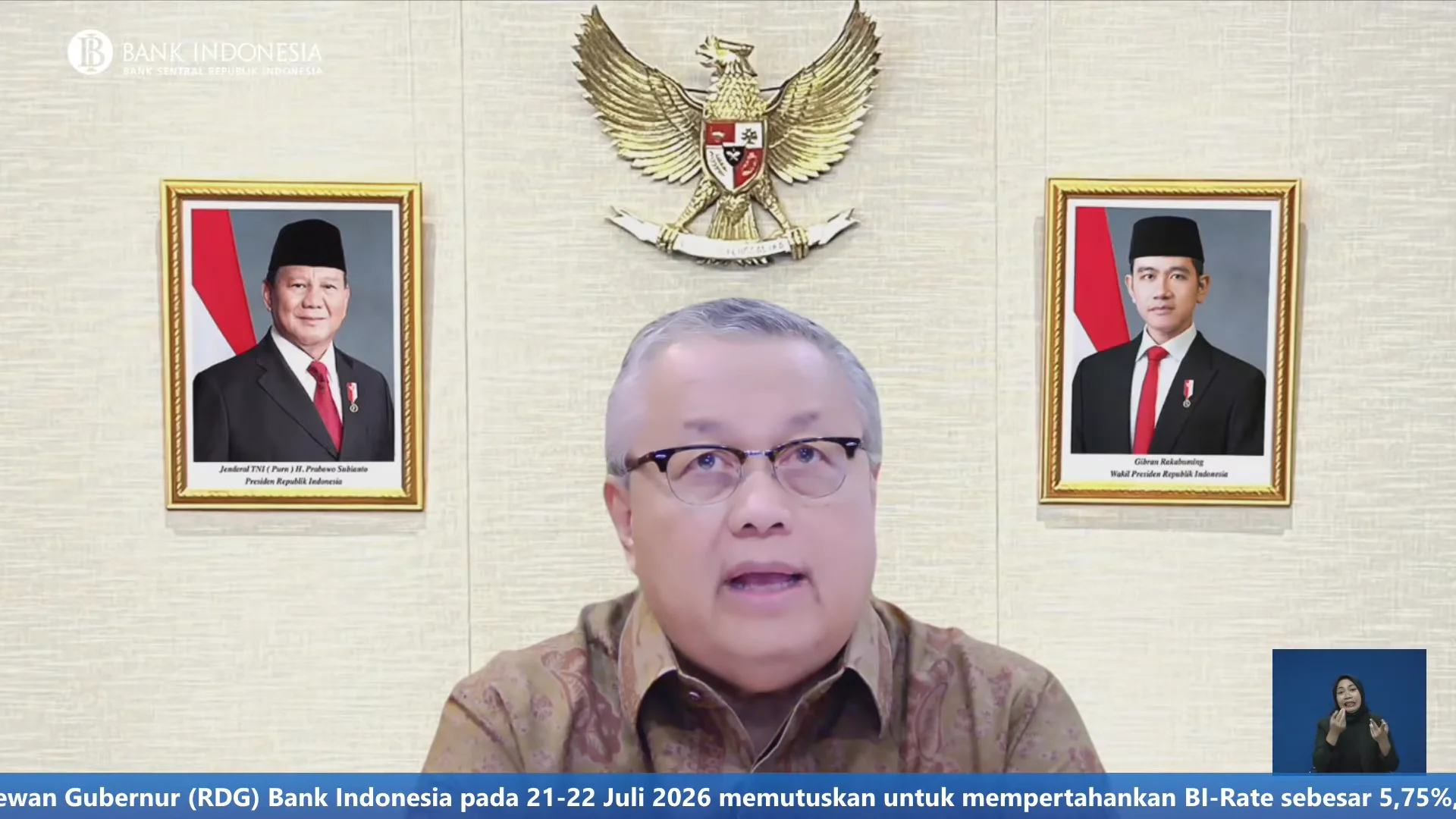
RRI.CO.ID, Jakarta – Bank Indonesia has adopted a new strategy to respond to global economic uncertainty without raising its benchmark interest rate. Bank Indonesia Governor Perry Warjiyo announced an increase in incentives to attract foreign capital inflows during a press conference following the Bank Indonesia Board of Governors’ meeting in Jakarta on Wednesday, July 22, 2026.
“What we did today at the Board of Governors meeting was not to raise the BI Rate, but to increase incentives to encourage greater inflows of foreign portfolio investment. This is what we decided today,” Perry stated.
He explained that Bank Indonesia has decided to raise the hedging swap incentive from 10 percent to 12.5 percent, as well as introduce a new 15 percent incentive for Domestic Non-Delivery Forward (DNDF) instruments. This measure is considered more effective for stabilizing the rupiah exchange rate without triggering a rise in domestic interest rates.
These increased incentive policies, announced by the Governor of Bank Indonesia, are aimed at international investors in Government Securities (SBN) and Bank Indonesia Rupiah Securities (SRBI). These adjustments to the incentives are projected to have a direct impact on net returns, offering higher and safer returns for global financial institutions.
“As we mentioned earlier, by raising the existing incentive for foreign portfolio investment, the hedging swap, which is currently at 10 percent, we are increasing it to 12.5 percent. What is currently not in place is an incentive for DNDFs; therefore, we are introducing a 15 percent incentive,” he said.
This strategic move is also expected to strengthen the stability of the rupiah exchange rate while encouraging capital inflows into Indonesia’s financial markets. By offering these higher incentives, the central bank aims to make local financial instruments much more attractive to global financial institutions.
Ultimately, Bank Indonesia hopes this approach will keep the domestic economy steady without needing to increase interest rates for local borrowers. Global market reactions will show how effectively these financial tools attract foreign investment over time.
News Recomendation
Memuat berita terbaru.....