



Miss Tjitjih Theater Group Preserves Sundanese Art for 100 Years
- 19 Sep 2026 10:32 WIB
- Voice of Indonesia
Poin Utama
- Miss Tjitjih Theater has preserved the spirit of Sundanese performing arts in Jakarta for nearly a century, adapting to changing times while maintaining its traditional identity.
- Around 137 people are currently involved in Miss Tjitjih activities, including actors, dancers, and musicians.

RRI.CO.ID, Jakarta - Named after a stage star from Sumedang, West Java, who rose to prominence in the 1920s, the legendary Miss Tjitjih Theater Group has remained committed to preserving the spirit of Sundanese performing arts in Jakarta for nearly a century.
Despite changing times and a devastating fire that destroyed its theater building, the company has continued entertaining the public by adapting to new technology without abandoning its traditional character.
Miss Tjitjih’s journey began with the traveling Opera Valencia Theater Group in the 1920s. Founded by Abubakar Bafagih, the group later met Nyi (Miss) Tjitjih, an 18-year-old from Sumedang, West Java who joined the troupe and brought a Sundanese character to its performances.
Opera Valencia was later renamed Miss Tjitjih Tonil Gezelschap. In 1928, the troupe arrived and settled in Jakarta, where Nyi Tjitjih became one of the city’s leading stage stars.
“The theater, which once used Malay, is now strongly characterized by the use of the Sundanese language,” said Chairperson of the Miss Tjitjih Arts Association, Sudariana, on Thursday, September 17, 2026.
However, the group suffered a major blow in 1939. While performing the play Gagak Solo, Nyi Tjitjih died on stage. Nevertheless, her name lived on and became the identity of the arts group. “Since then, the figure of Nyi Tjitjih has served as an inspiration to all of us,” said Sudariana.
Maintaining the art form for nearly a century has not been easy. The Miss Tjitjih theater building was once destroyed by fire, forcing the artists to move their performances and rent a cinema in the Teluk Gong area.
“Since then, we have performed in Teluk Gong, renting a cinema in the area,” he said.
In 2004, the Miss Tjitjih theater building was rebuilt by the Jakarta Provincial Administration. Its return provided renewed motivation for the artists to continue preserving their artistic identity.
The name Miss Tjitjih is closely associated with horror stories, including Beranak dalam Kubur, which was popular in the 1970s. However, Sudariana emphasized that Miss Tjitjih performances have also featured historical chronicles, wayang stories, romance, martial arts, daily life, and narratives with Middle Eastern and Islamic themes.
“Our biggest hits are still horror stories because those are what audiences most often request,” he said.
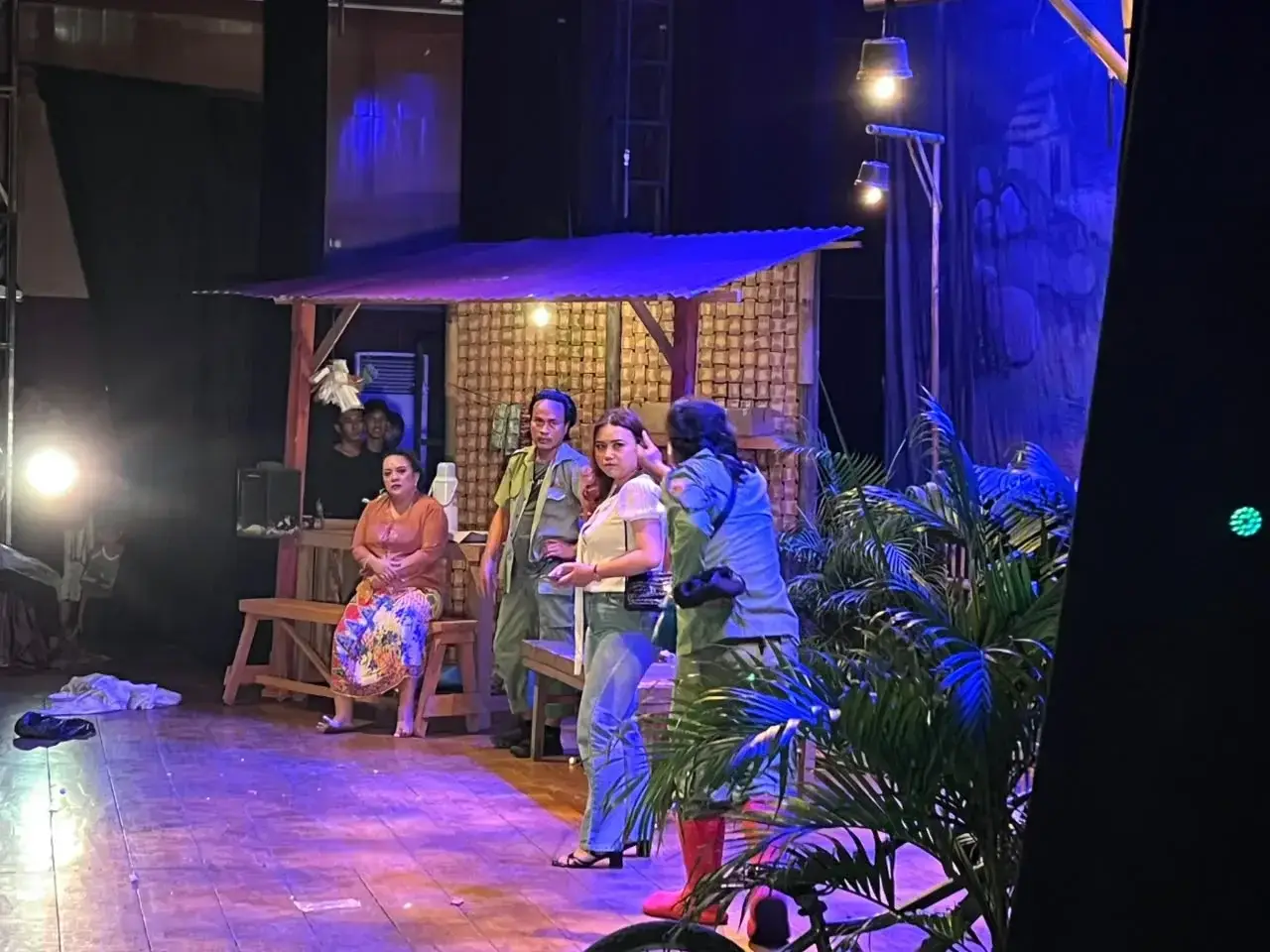
Humor is also woven into the performances amid the dramatic tension to ensure that the shows remain entertaining. As times have changed, Miss Tjitjih has adapted accordingly. Sound technology and musical effects are used to strengthen the atmosphere of the performances, while traditional elements such as dance, music and Sundanese identity continue to be preserved.
“In terms of its character, we still have an identity that is distinct from other forms of theater,” said Sudariana.
Regeneration is also an important part of the group’s work. Children and teenagers take part in training to learn movement, music, dance and dialogue. Interestingly, those who join are not required to have an arts background or come from families of artists.
“Even those who have no prior knowledge or basic skills can learn here, because Miss Tjitjih is open to everyone,” he said.
Today, around 137 people remain involved in Miss Tjitjih’s activities, including actors, dancers and musicians. Sudariana hopes that artists will be given more opportunities to create so that traditional art can continue to have a place on stage amid changing times. “The greatest request is to provide artists with broader spaces and opportunities to create,” he said.
Nearly a century after Nyi Tjitjih left the stage, her name continues to live on through successive generations. “Nyi Tjitjih has passed away, but the spirit of her art remains eternal,” concluded Sudariana. (Annaila Azzahra-EN)
News Recomendation
Memuat berita terbaru.....