



Hindu Women Named Pillars of Yadnya in Bali Ceremonies
- 15 Sep 2026 22:00 WIB
- Voice of Indonesia
Poin Utama
- Hindu women play a pivotal role in yadnya in Bali, from preparing ritual offerings to supporting the implementation of religious ceremonies.
- Hindu religious counselor Ni Wayan Sumetri described women as a key pillar of family harmony and an important part of yadnya.
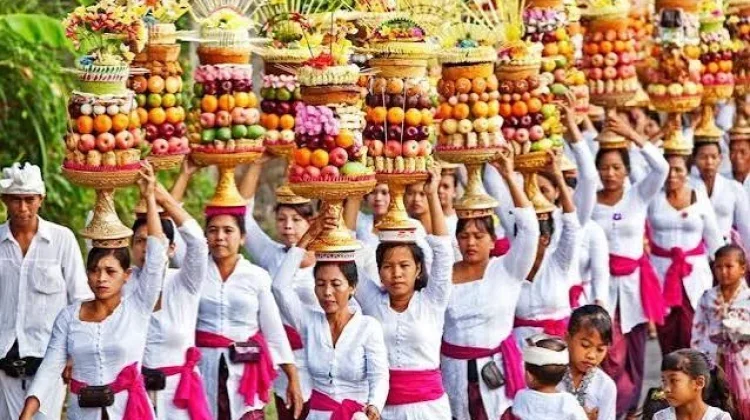
RRI.CO.ID, Denpasar - Hindu women play a pivotal role in the execution of yadnya in Bali, from preparing ritual paraphernalia to ensuring the smooth conduct of religious ceremonies. A Hindu religious counselor at the Gianyar Regency Ministry of Religious Affairs Agency, Ni Wayan Sumetri, said this role is also integral to the life of Hindu families and communities.
Yadnya, a term in Hinduism, refers to sincere and selfless offerings or sacred sacrifices made as a form of reverence to God, fellow humans, ancestors, and nature. Sumetri explained that, in the Hindu worldview, women hold a noble status and are one of the keys to family harmony.
“Women are considered the key to a family’s harmony. They are seen as the light that illuminates the family,” she said on Tuesday, 15 September 2026.
According to her, women also have a role in upholding values, including in building and educating the family. “A woman must be courageous in managing the household and raising children.”
In Balinese Hindu society, women bear significant responsibility in carrying out yadnya, particularly in preparing various ceremonial requisites. Sumetri noted that Hindu women are expected to be skilled in activities such as mejahitan and metanding banten, both are the processes of making offerings.
“A woman’s position has a very important role and status in Hindu religious teachings; in fact, women are the pillar of yadnya,” she explained.
This role spans from the preparation stage through the actual performance of a yadnya. The skill of mejahitan is typically passed down through family and community environments. “The learning process for mejahitan actually occurs naturally, because every girl born into a Hindu family faces certain expectations,” said Sumetri.
She added that these skills can be introduced from an early age by having children assist their mothers with light tasks. This tradition constitutes one form of intergenerational transmission of Hindu knowledge and culture. Girls are gradually introduced to making canang (small daily offerings) and other ritual paraphernalia used in religious activities.
The Gianyar Regency Hindu Religious Counselor also underscored the critical role of mothers in guiding daughters to understand religious and cultural values. “The role of Hindu women, especially once they become mothers, is highly responsible; they play a part in teaching their daughters to learn mejahitan,” she explained.
Beyond the family sphere, women’s involvement in religious activities also serves a social function for the community. Participation in ceremonies can strengthen togetherness, solidarity, and interpersonal ties among residents.
“Through religious rituals rich in various artistic symbols, these practices are not only an effective means of gathering the faith community but also of reinforcing solidarity,” said Sumetri.
She added that religious activities provide a space to tighten bonds of brotherhood and foster a spirit of communal unity. Sumetri emphasized that the role of Hindu women cannot be separated from that of men in family and community life. Both share responsibility for building a harmonious life grounded value.
She also highlighted the importance of honoring women within family life. Women play a crucial role in building a harmonious and prosperous family. Citing teachings from the Hindu Holy Book Manawa Dharma Sastra, she noted the emphasis on respecting women in the family, which she described as one foundation for creating happy and prosperous households.
Balinese women also contribute to strengthening social and cultural life through various customary activities and religious rituals. This involvement makes them essential to sustaining traditions and community life.
Sumetri expressed hope that the role of Hindu women in yadnya will be preserved while adapting to contemporary developments. “Let us strengthen unity and cohesion so that a peaceful and prosperous life can be realized,” she concluded. (Annaila Azzahra-EN)
News Recomendation
Memuat berita terbaru.....