



Etu Bani Tradition, Expression of Devotion by Daughters-in-Law to Husband's Family
- 24 Agt 2026 16:34 WIB
- Voice of Indonesia
Poin Utama
- Etu Bani, also known as Etu Bei Bani, is a traditional Malaka wedding practice in East Nusa Tenggara (NTT) that expresses respect to the husband’s family members who cannot attend the wedding.
- The tradition is particularly practiced in the Wewiku-Wehali lowlands and involves the daughter-in-law delivering food to the Uma Mane family.
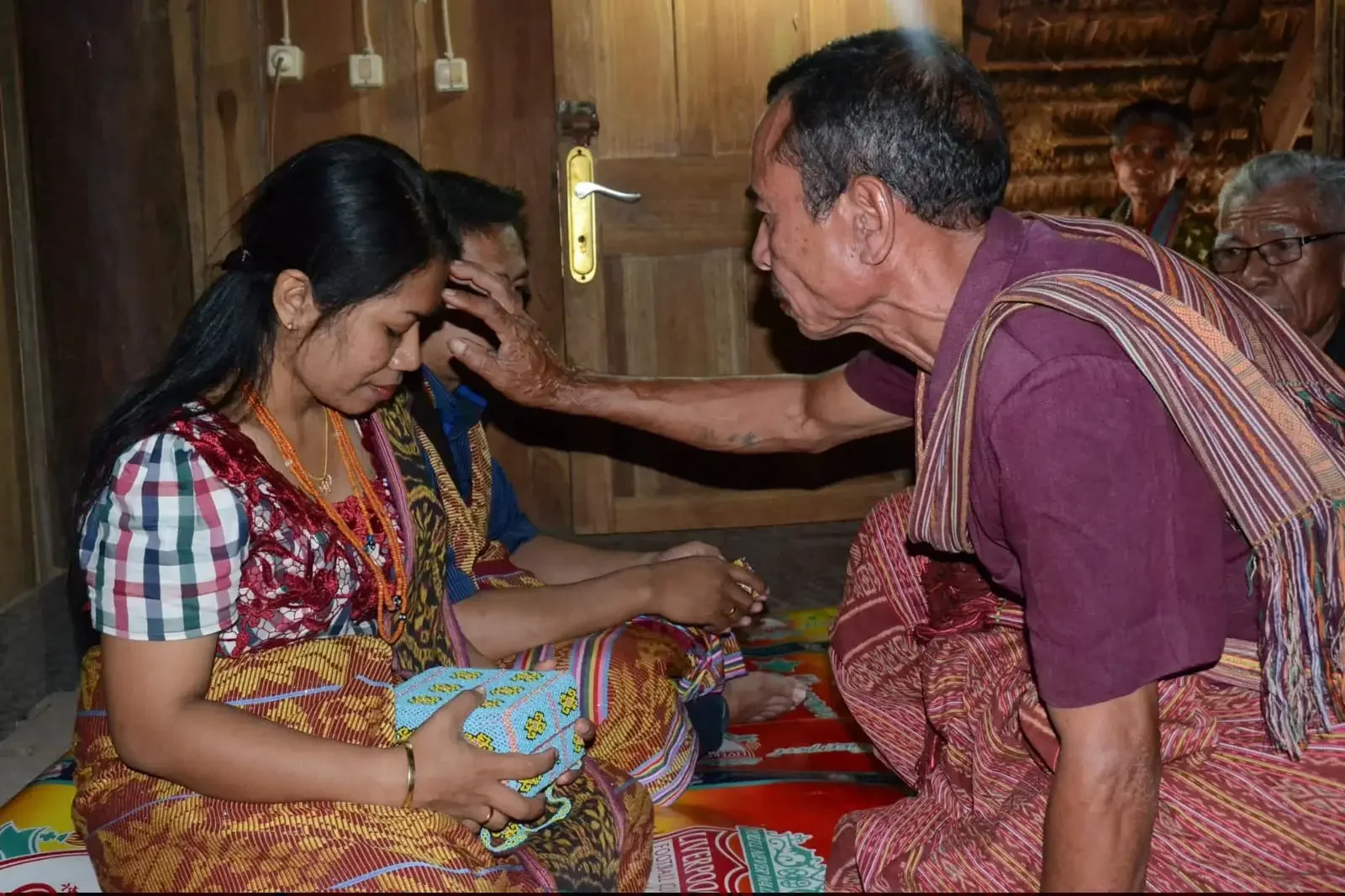
RRI.CO.ID, Atambua – When a traditional wedding celebration is in full swing, the sound of laughter and family conversations fills the festive tent. Yet behind the merriment, there are other family members who are unable to attend the celebration.
As part of the traditional wedding rituals in Malaka Regency, East Nusa Tenggara (NTT), particularly in the lowland areas of Wewiku-Wehali, a form of respect is still extended as an expression of devotion by daughters-in-law to those who cannot attend. This tradition is known as Etu Bani, or Etu Bei Bani, a symbol of respect recognized by the indigenous community, although it is increasingly being eroded by the passage of time.
A community leader and cultural practitioner in Malaka Regency, Pius Seran, explained Etu Bani simply as the presentation of food to the parents-in-law. The tradition represents a profound expression of respect for the parents and relatives of the husband’s family (Uma Mane) who are unable to attend the celebration.
“Etu means rice, while Bei Bani means parents-in-law, so it means rice for the parents-in-law. It is carried out as a great expression of respect for all parents-in-law, mothers-in-law and fathers-in-law, grandparents, uncles, and aunts who are unable to attend,” said Pius on Saturday, August 22, 2026.
In this tradition, the daughter-in-law holds an important position as the principal participant in the customary service. Together with several relatives and a liaison (Ai Kalete), she brings food to the Uma Mane when the family at the festive tent begins enjoying the wedding feast.
The rice must still be hot when it is delivered. For Pius, the heat of the food is not merely a technical matter, but symbolizes that family members who cannot attend are still being respected and receive the same meal.
“The rice is still hot to show the Bebani that while the people at the festive tent are eating, the Bebani are also eating. They must not receive leftover food,” said Pius.
In some instances, Etu Bani consists of more than rice and side dishes. It may also involve bringing a pig and approximately 20 to 50 kilograms of rice to be prepared together with the Uma Mane family.
The daughter-in-law also helps with the preparations, including when the animal is slaughtered and the food is cooked. In certain circumstances, the cooking process may continue until morning because the entire customary service is carried out with utmost sincerity and dedication.
After the Uma Mane family receives and enjoys the meal, the daughter-in-law and her entourage return to the wedding celebration. As a gesture of appreciation, the Uma Mane family presents the daughter-in-law with a piece of traditional cloth.
The tradition demonstrates that marriage in Malaka society goes beyond the union of two individuals. Marriage also establishes kinship ties strengthened through service, respect, sacrifice, and sincerity.
“These values strengthen kinship, mutual appreciation, mutual respect, and mutual service. Everything comes from sincerity of heart, not from anything artificial,” said Pius.
Interestingly, Etu Bani is not always performed in the same manner or on the same day or at the same time. When the Uma Mane and Uma Veto families live in the same village or remain easily accessible by vehicle, the procession can take place directly on the night of the wedding celebration.
However, geographical distance does not necessarily erase the customary value of the tradition. When the Uma Mane family lives in Kupang, Flores, Java, or another distant location, the expression of respect can be carried out symbolically through a representative household.
The designated house serves as a nearby or symbolic home to preserve the meaning of the gesture. The family living there enjoys the meal as a representation of the Uma Mane family members who are unable to attend.
“If the Uma Mane family is in Kupang, Flores, or Java, the symbolic value does not disappear. A nearby house is designated to show that the respect remains,” said Pius.
However, Pius acknowledged that changing times have led to shifts in the practice of Etu Bani. A tradition that was once firmly observed is now no longer necessarily found at every traditional wedding among the people of Malaka.
According to him, carrying out the customary practice in its entirety requires time, money, effort, and family preparedness. Nevertheless, these material sacrifices are insignificant compared with the cultural values embedded in the tradition.
“If we carry it out purely according to tradition, we do lose time, money, and energy. But in terms of preserving its values, this cannot be measured in material terms,” said Pius.
Despite these changes, several areas and community groups continue to preserve Etu Bani. Pius said the tradition is still practiced in areas such as Ikumuan in West Malaka, Kamanasa in Central Malaka Subdistrict, and the Villages of Weulun and Weoe in Wewiku-Malaka Subdistrict, as well as among certain clans.
He hopes people will not be too quick to conclude that the absence of Etu Bani means the disappearance of the customary tradition. There are circumstances in which a family may decide to omit or modify the practice.
Pius explained that if the tradition is not carried out, the decision should be openly communicated between the Uma Veto and Uma Mane families during customary discussions. Such communication is important so that the extended family understands the reasons behind the decision to omit the tradition.
“If Etu Bani is not carried out for certain reasons, the matter must be communicated between the Uma Veto and Uma Mane. That way, it will not become a question among other family members,” said Pius.
Meanwhile, Adriani Nahak, a millennial from the Uma Lo’o Ikumuan clan, shared her experience of carrying out the Etu Bani tradition with enthusiasm. “At that time, I did not carry it out on the same day, but several days after the wedding,” said Adriani.
For her, the greatest challenge is not simply preserving the form of the Etu Bani procession, but ensuring that younger generations understand why the tradition deserves to be respected. For this reason, education has become an important avenue for preserving cultural memory.
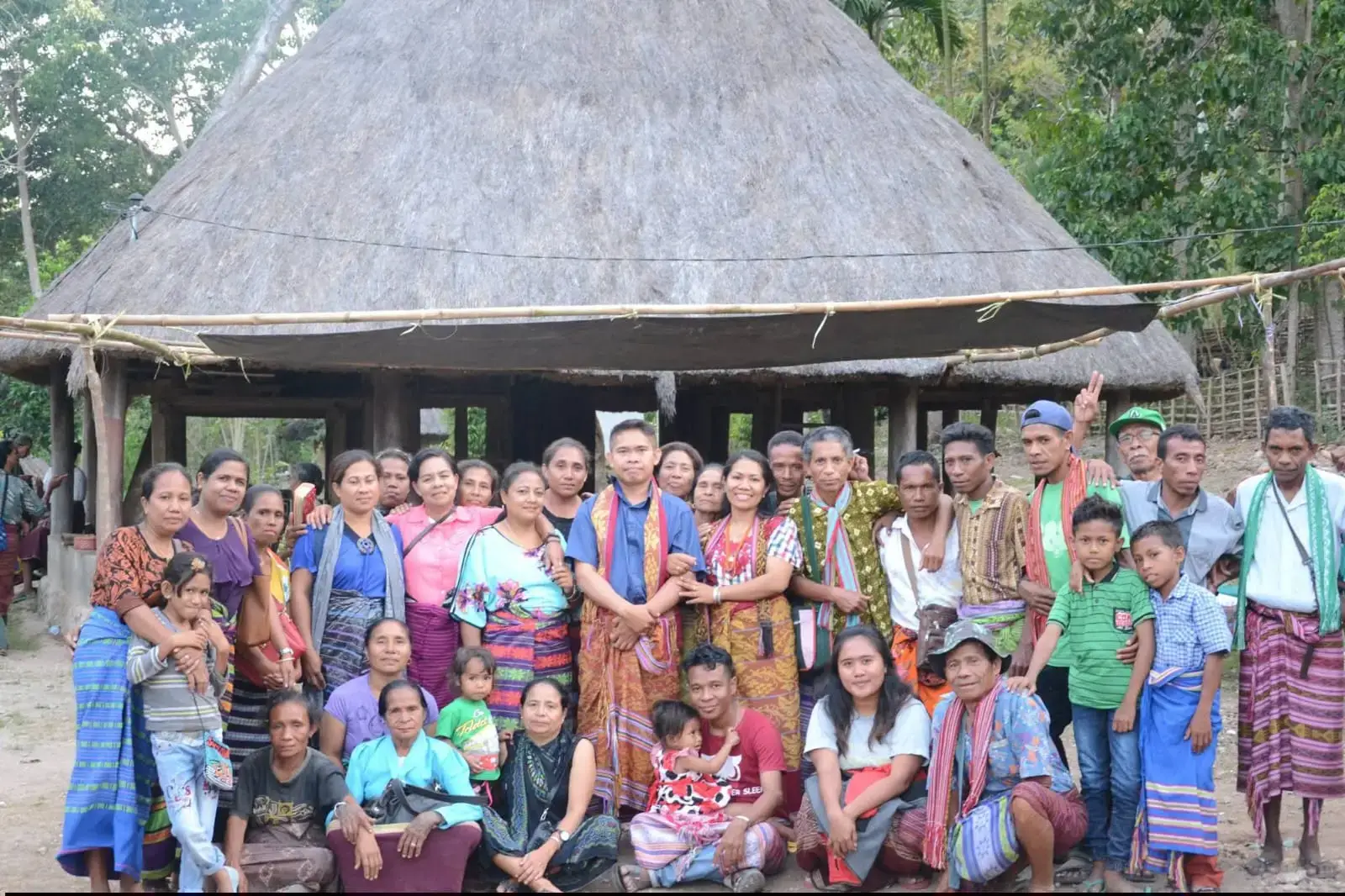
Adriani is a descendant of the Uma Oe Umamolin and Tafatik Kaberan Rai Umalor clans in West Malaka Subdistrict. She emphasized that Etu Bani is ultimately not merely about rice, meat, pigs, rice provisions, or the cloth presented by the Uma Mane family.
“Behind these symbols lies a message about how a family respects its elders, maintains kinship, and serves others with sincerity. This is our customary tradition, so it must be preserved,” she said firmly.
The tradition also serves as a reminder that progress does not necessarily require communities to abandon their ancestral heritage. Through the understanding of younger generations, the values of respect and togetherness can continue to live on in forms that are compatible with changing times.
Both Pius and Adriani hope that Etu Bani will not remain merely a story from the past. They hope the tradition will continue to form part of Malaka society’s identity, teaching appreciation, service, sacrifice, virtue, and sincerity among families.
Personally, Pius also encourages local traditions such as Etu Bani to be introduced through local-content curricula in schools. Such material should not merely be discussed, but also explained, documented, practiced, and even simulated so that it can be more easily understood and embraced by future generations.
“Local-content education should discuss old cultural traditions that need to be explained and practiced. The younger generation must have the willingness to embrace this culture,” said Pius. (Annaila Azzahra-EN)
News Recomendation
Memuat berita terbaru.....