



Bongal Site Discovery Shifts Focus to Grassroots Islam Arrival History
- 12 Agt 2026 14:10 WIB
- Voice of Indonesia
Poin Utama
- BRIN discovered 7th–8th-century artifacts at the Bongal Site in Central Tapanuli, North Sumatra.
- The findings could shift the historical timeline of Islam’s arrival in the Nusantara, suggesting Islamic presence as early as the 7th–8th centuries.
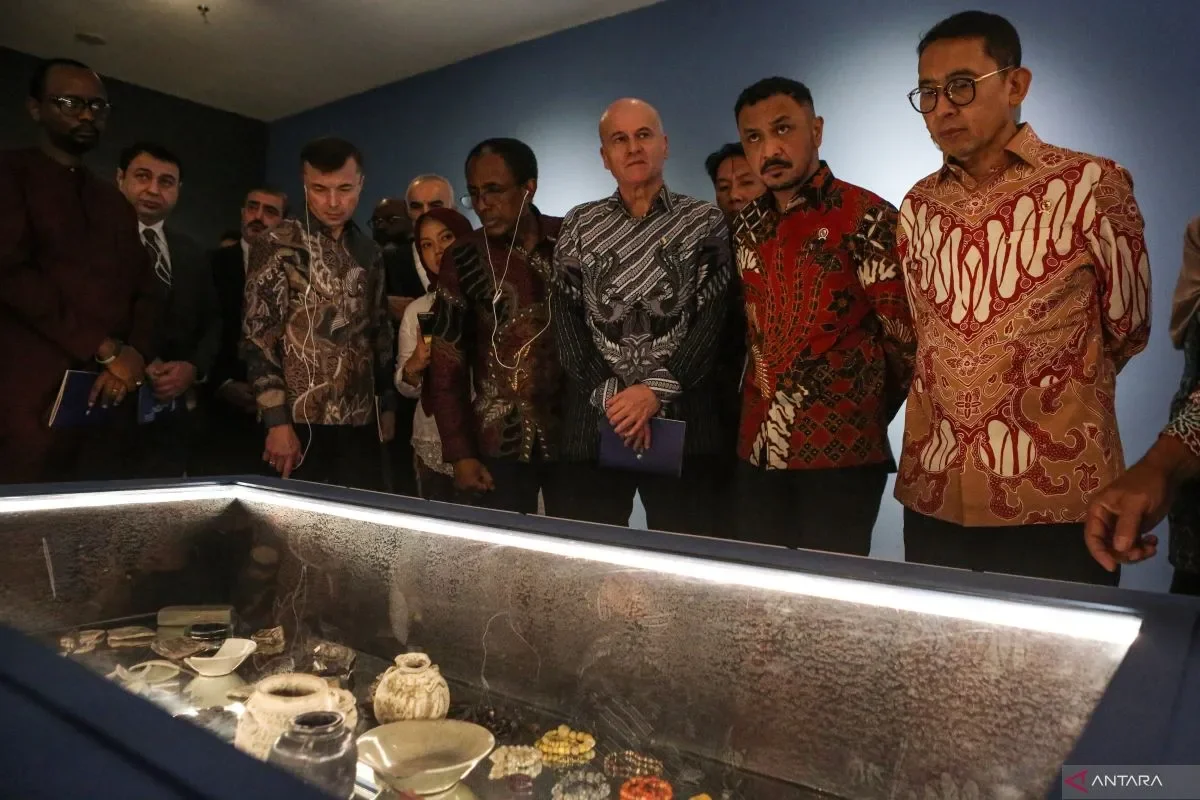
RRI.CO.ID, Jakarta - The discovery of 7th-century artifacts at the Bongal Site in Central Tapanuli, North Sumatra, by the National Innovation and Research Agency (BRIN) is beginning to shift historians’ perspectives on mapping the arrival of Islam in the Nusantara. This finding encourages a grassroots archaeology approach that focuses on the lives of ordinary people in the past, rather than solely on palace and kingdom histories.
Head of BRIN’s Center for Prehistoric and Historical Archaeology Research, Irfan Mahmud, highlighted that excavations conducted by the research team have yielded significant results that shift the previously understood historical timeline.
"The team made a significant discovery regarding the arrival of Islam, in the era of the Prophethood that goes back to the 7th and 8th centuries, which is earlier than previously thought. This finding opens up broader possibilities for substantiating various hypotheses concerning grassroots Islamic archaeology," he said during the Diversity Forum Webinar Series (Series #38) in Jakarta on Wednesday, August 12, 2026.
Irfan explained that the archaeological findings dating from the 7th to 8th centuries represent a time gap of approximately seven centuries. This becomes evident when compared to historical narratives that often state Islam only took strong root as a political entity or kingdom around the 13th to 15th centuries.
According to him, this vast time span constitutes an essential historical void that archaeologists must urgently explore to understand the lifestyle patterns of early Muslim communities. “Well, seven centuries is not a short span, and there are many locations. I believe that with these friends’ discoveries, it will open opportunities and efforts to find new things,” he said, as quoted by Antara.
Irfan assessed that this discovery will open broader space for grassroots Islamic archaeology. The finding urges historians and researchers to begin viewing history through the lens of ordinary people in the past, not only focusing on the lives of nobility in palace centers.
Echoing this, Head of BRIN’s Archaeology, Language, and Literature Research Organization (Arbastra), Herry Yogaswara, conveyed that the facts from the Bongal Site have indeed given rise to new dialectics among scientists and academics. He did not deny that reinterpretation of this historical map has sparked academic debate, but he viewed it as a very constructive and healthy scientific dynamic.
“I think in the research world, debate is not a problem as long as it is based on evidence,” he said.
To mature data collection, preserve artifacts, and confirm missing pieces of early Islamic civilization history, Herry mentioned that BRIN plans to take strategic steps. The agency will facilitate large-scale research in the western coastal region of Sumatra.
“Because we are also thinking of establishing a field station with fairly long-term research in the Bongal area or the West Coast of Sumatra. In essence, on a larger scale, it is to strengthen the science of archaeology itself, particularly that related to Islamic civilization,” said Herry Yogaswara.
Archaeological evidence from Bongal, including Umayyad and Abbasid coins, Islamic glass fragments, medical instruments, and inscribed metal plates, supports the conclusion that early Islamization in Indonesia occurred primarily through peaceful commercial interactions. Consequently, these findings position Bongal as one of the earliest gateways of Islamic civilization in the archipelago. ***
News Recomendation
Memuat berita terbaru.....