



Indonesia Showcases World's Oldest Nonfigurative Cave Art at Festival
- 13 Jul 2026 14:03 WIB
- Voice of Indonesia
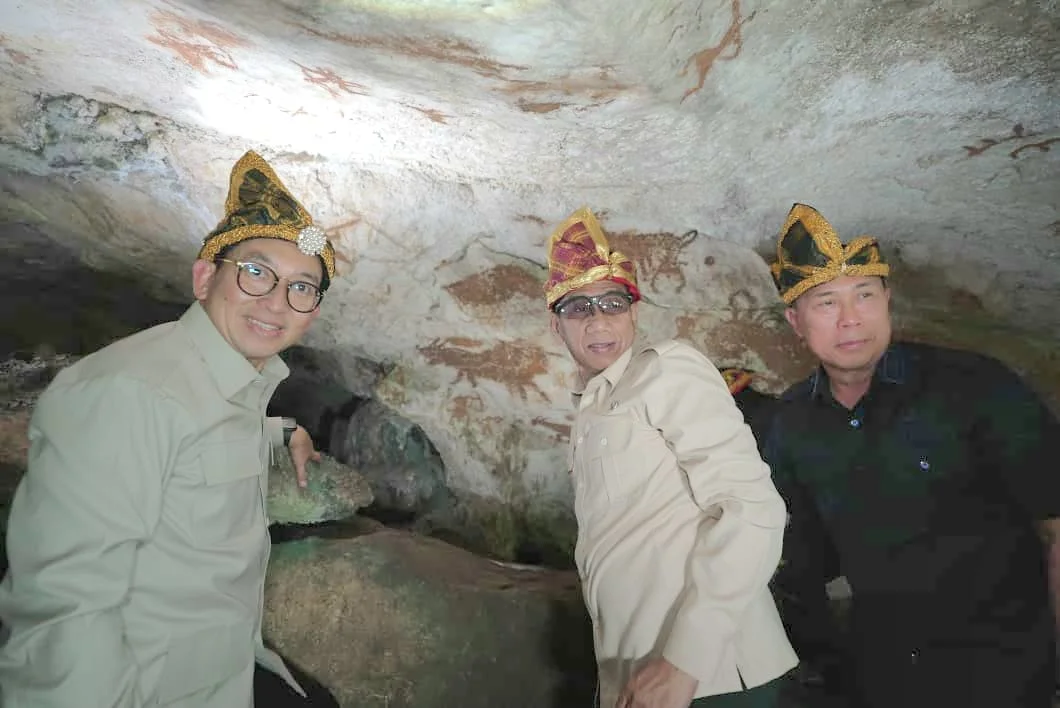
RRI.CO.ID, Muna - Indonesia is stepping up efforts to protect and promote one of the world's most significant prehistoric heritage sites after recent research identified cave paintings in Southeast Sulawesi as the oldest known nonfigurative rock art. The initiative was highlighted by Minister of Culture Fadli Zon during the opening of the fourth Liangkobori Festival in Muna Regency, Southeast Sulawesi, Saturday, 11 July 2026.
According to a statement from the Ministry of Culture, the festival celebrates the cultural heritage of Liangkobori while strengthening conservation, research, and public awareness of the region's prehistoric sites. The event follows the publication of a January 2026 international study that dated the rock art in Metanduno Cave to at least 67,800 years old, making it the world's oldest known example of nonfigurative cave art.
Fadli Zon said the festival represents more than an annual cultural celebration, describing it as an opportunity to introduce a milestone in human civilization to both Indonesians and the international community. “Through the Liangkobori Festival, we are reopening one of the most important chapters in human history. It is not only the history of Sulawesi or Indonesia, but also the history of the world,” he said.
The minister noted that the research findings have strengthened Indonesia's position in the study of early human civilization while opening new opportunities for international research on human origins, prehistoric rock art, and cultural evolution. He emphasized that scientific discoveries of this significance must be accompanied by stronger conservation efforts involving government institutions, researchers, academicians and local communities.
During a visit to Metanduno Cave, Fadli reiterated that preserving the prehistoric site is essential to safeguarding Indonesia's cultural heritage. “This is a cultural asset that we must protect. The discovery shows that tens of thousands of years ago, life and civilization already existed in this region. Therefore, this site must be secured, conserved, and preserved as part of Indonesia's cultural heritage,” he said.
The Ministry of Culture is also encouraging the digital documentation of every prehistoric rock art panel across the Muna karst landscape through collaborative research involving national and international institutions. The documentation is expected to strengthen conservation efforts while providing a scientific foundation for future archaeological studies.
Southeast Sulawesi Governor, Andi Sumangerukka, said the Liangkobori Festival reflects collaboration between the government and local communities to preserve cultural heritage while promoting sustainable cultural tourism. Muna Regent Bachrun added that the local administration is committed to developing Liangkobori as a center for archaeological research, cultural education, and heritage tourism without compromising conservation principles.
The Indonesian government plans to accelerate the designation of the Liangkobori area as a national cultural heritage site while preparing its nomination for the UNESCO World Heritage List. Through stronger conservation, research, and international cooperation, Indonesia aims to introduce Liangkobori and Metanduno Cave as globally significant symbols of humanity's shared prehistoric legacy.
News Recomendation
Memuat berita terbaru.....