



Kaghati Kolope Festival to Preserve Ancient Kite Tradition
- 13 Jul 2026 10:25 WIB
- Voice of Indonesia
Poin Utama
- Muna Regency organized the Kaghati Kolope Festival to preserve one of the world's oldest kite traditions while introducing its cultural significance to younger generations.
- Held at the Liangkabori Cave heritage site, the festival promotes cultural tourism by showcasing prehistoric history, traditional craftsmanship, and Muna's unique cultural identity.
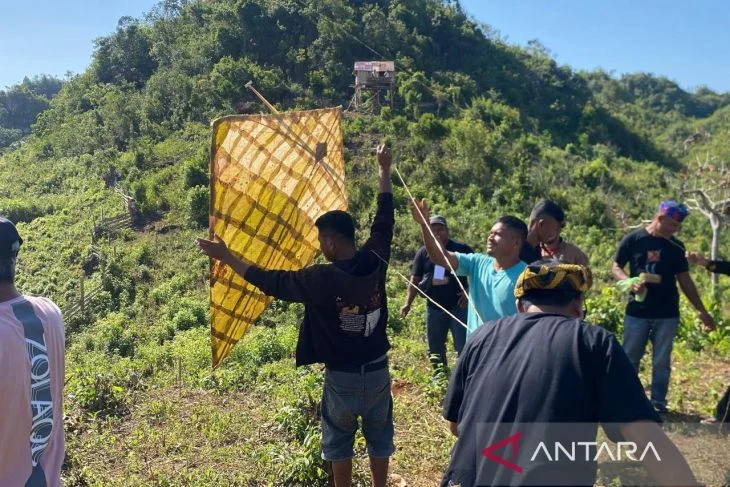
RRI.CO.ID, Muna - The Muna Regency Administration in Southeast Sulawesi has turned to cultural tourism to protect one of the world's oldest aviation heritages, hosting a unique kite festival at the Liangkabori cave cultural heritage site over the weekend.
The festival, centered on the ancient Kaghati Kolope kite, aimed to revitalize interest in a prehistoric tradition that faces the threat of modernization. Organized through Liangkabori village, the event seeks to bridge ancient history with contemporary cultural tourism, transforming a local heritage into a strategic destination driver.
Head of Muna Tourism Agency LM Masrul emphasized that the event serves as a crucial milestone in reintroducing local roots to the younger generation before they are completely eroded by time.
"The Kaghati Kolope is an ancient kite. Its historical traces are clearly recorded at the Liangkobori Cave site, which features prehistoric wall paintings depicting a person flying a kite," said Masrul on Sunday, July 12, 2026, as quoted by Antara.
Masrul noted that the prehistoric rock art inside the Liangkabori cave depicts clear figures flying kites, offering tangible historical evidence of the island's long-standing connection to the practice. What sets the Kaghati Kolope apart from modern counterparts is its strict adherence to organic materials passed down through generations.
The body of the kite is crafted from dried wild forest tuber leaves (kolope), supported by a bamboo frame, and strung together using pineapple fibers or inner tree bark.
As a concrete step forward, the Muna Tourism Agency has committed to a massive campaign to ensure the younger generation remains familiar with and takes pride in maintaining the kite's existence.
"Beyond its historical value, this tradition is also rich in profound philosophy regarding the harmony between humans and nature, the spirit of mutual cooperation, and the strengthening of regional cultural identity," Masrul added.
The competition itself featured strict criteria to maintain authenticity. Judges evaluated entries based on their purely natural composition, flight capability, and traditional accessories.
"There are seven traditional kites participating in the competition, and around 20 creative kites," Masrul explained.
The tourism agency hopes that consistent preservation efforts will not only shield Muna’s ancestral identity from oblivion but also elevate the festival into a strategic national and international cultural attraction. The meticulousness required to create these ancient flyers remains a testament to local craftsmanship.
One of the festival participants, Laode Sainal, shared that producing a single authentic kite demands immense patience and days of manual labor.
"This kite is made using kolope leaves harvested directly from the forest by the artisan. The time required for construction depends heavily on the maker's skill; some are finished in a single day, while others take up to five days. The kite I am using here took five days to make," said Laode. ***
News Recomendation
Memuat berita terbaru.....