



Poin Utama
- Surau Lubuk Bauk is a centuries-old Minangkabau wooden structure built without nails between 1896 and 1901.
- The traditional building survived the devastating 2009 West Sumatra earthquake, proving the resilience of Minangkabau architectural engineering.
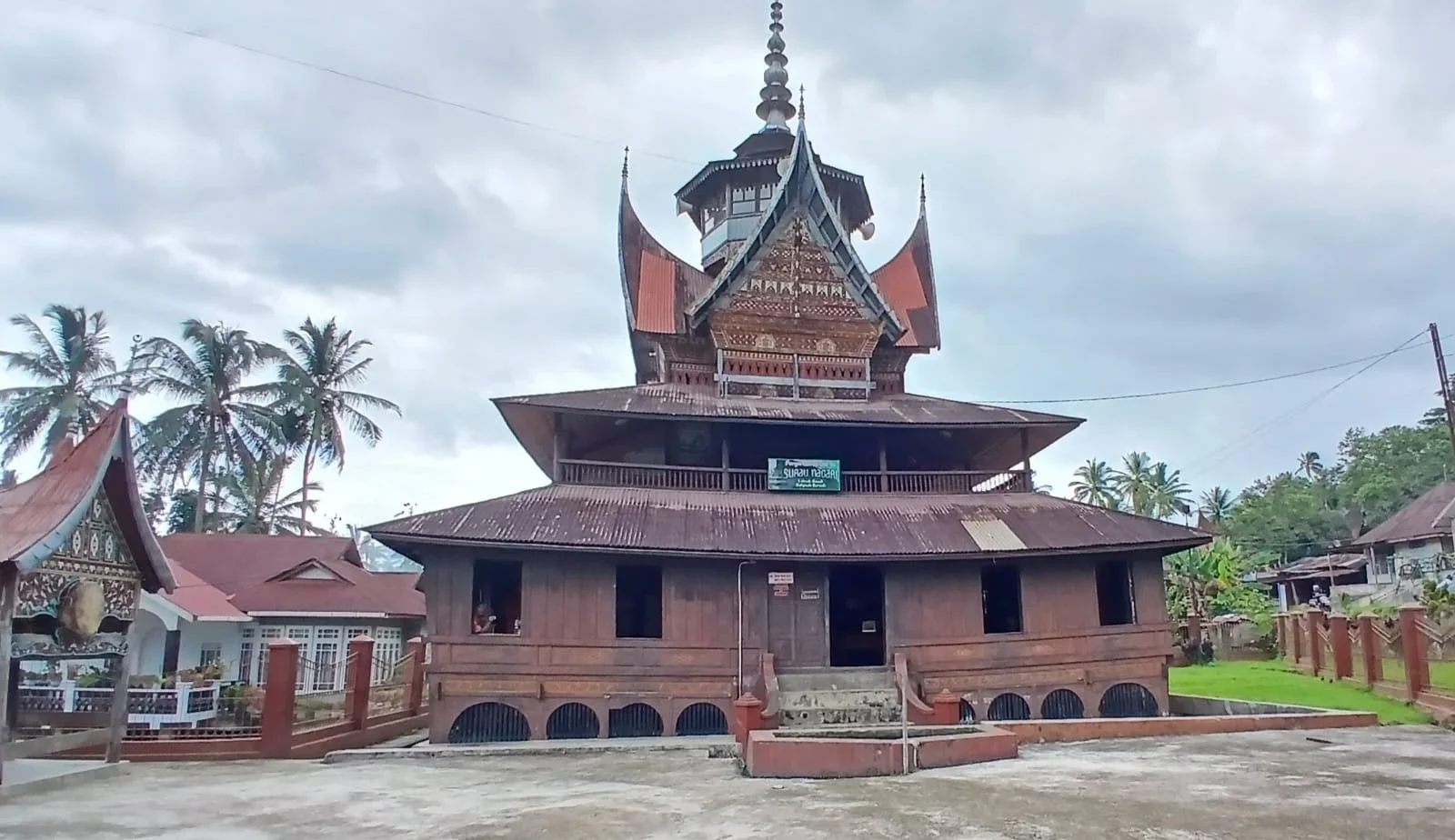
RRI.CO.ID, Tanah Datar - Amid the rapid concrete modernization sweeping through western Sumatra, Surau Lubuk Bauk in Batipuh Baruh Subdistrict, Tanah Datar Regency, continues to stand tall as a monumental testament to Minangkabau heritage.
Also known locally as the Lubuk Bauk Mosque, this centuries-old wooden sanctuary remains a living witness to the rich intersection of indigenous culture and Islamic education in the Ranah Minang region.
Construction of the surau began in 1896 and was completed in 1901. It draws its name from the surrounding area, which has historically served as the spiritual and communal epicenter for the local population. Situated directly adjacent to the Al-Ula Mosque along a major highway, the site remains easily accessible and routinely draws cultural historians and heritage tourists keen on studying traditional Javanese and Sumatran architectural forms.
Architecturally, Surau Lubuk Bauk is a structural masterpiece. The building features a symmetrical square floor plan spanning 154 square meters and reaches an imposing height of 13 meters.
The defining engineering feat of the structure lies in its foundation: the entire weight of the building is borne by 30 octagonal pillars crafted from surian wood (toon tree). In line with ancient Minangkabau craftsmanship, the entire frame was assembled utilizing an intricate system of traditional wooden dowels and interlocking joints—completely eliminating the use of metal nails.
Furthermore, the surau is designed as a stilt house, elevated roughly 1.4 meters off the ground. The underfloor clearances and exterior panels are adorned with hand-carved relief work depicting cascading plant tendrils, showcasing the high artistic mastery of late 19th-century West Sumatran craftsmen.
To ensure the longevity of the building, ancestral wood-treatment techniques were strictly followed. The dedicated caretaker of Surau Lubuk Bauk, Armi Destari, revealed the secret behind the timber's resilience, “Almost the entire building is still original; only the attic section has been replaced. The wood used back then was submerged in water for five years before construction, so its strength is truly extraordinary,” Destari noted on Monday night, May 18, 2026.
This profound understanding of organic materials and flexible structural mechanics was put to the ultimate test during the catastrophic 7.6-magnitude West Sumatra earthquake in 2009. While modern brick-and-mortar buildings across the regency collapsed, the nail-free wooden surau emerged unscathed.
“During the great 2009 earthquake, this building merely swayed back and forth, but it did not collapse. It proves that traditional Minangkabau architecture was engineered to be incredibly resilient,” Destari recalled.
Beyond its architectural marvels, Surau Lubuk Bauk holds a sacred place in the history of Islamic intellectualism in Indonesia. Exactly a century ago, around 1926, a young Buya Hamka, who would later grow to become one of Southeast Asia's most influential Islamic scholars, philosophers, and novel authors, sat on these very wooden floors to study theology under the tutelage of Syekh Harun Thoh.
The revered mentor passed away decades later and was laid to rest in a plot located just a short distance from the surau gates in 1959.
Historically managed as a clan-owned surau (surau kaum) belonging to the indigenous Jambak Tribe, the compound sits on wakaf (endowment) land generously donated by the community elder Datuk Bandaro Panjang.
Today, the site has been formally designated as a protected national cultural property under the direct supervision of the Batusangkar Archaeological Heritage Preservation Center, standing proudly as an irreplaceable symbol of cultural resilience and ancestral wisdom. (Naura Sofia/EN)
News Recomendation
Memuat berita terbaru.....