



Palembang Begins Converting Waste into Electricity
- 02 Okt 2026 08:35 WIB
- Voice of Indonesia
Poin Utama
- Palembang has begun operating the Keramasan Waste-to-Energy (WTE) facility as a pilot project under the National Strategic Projects program.
- The facility conducted its initial combustion phase using stoker moving-grate technology on September 23, 2026, incinerating 1,100 tons of waste.
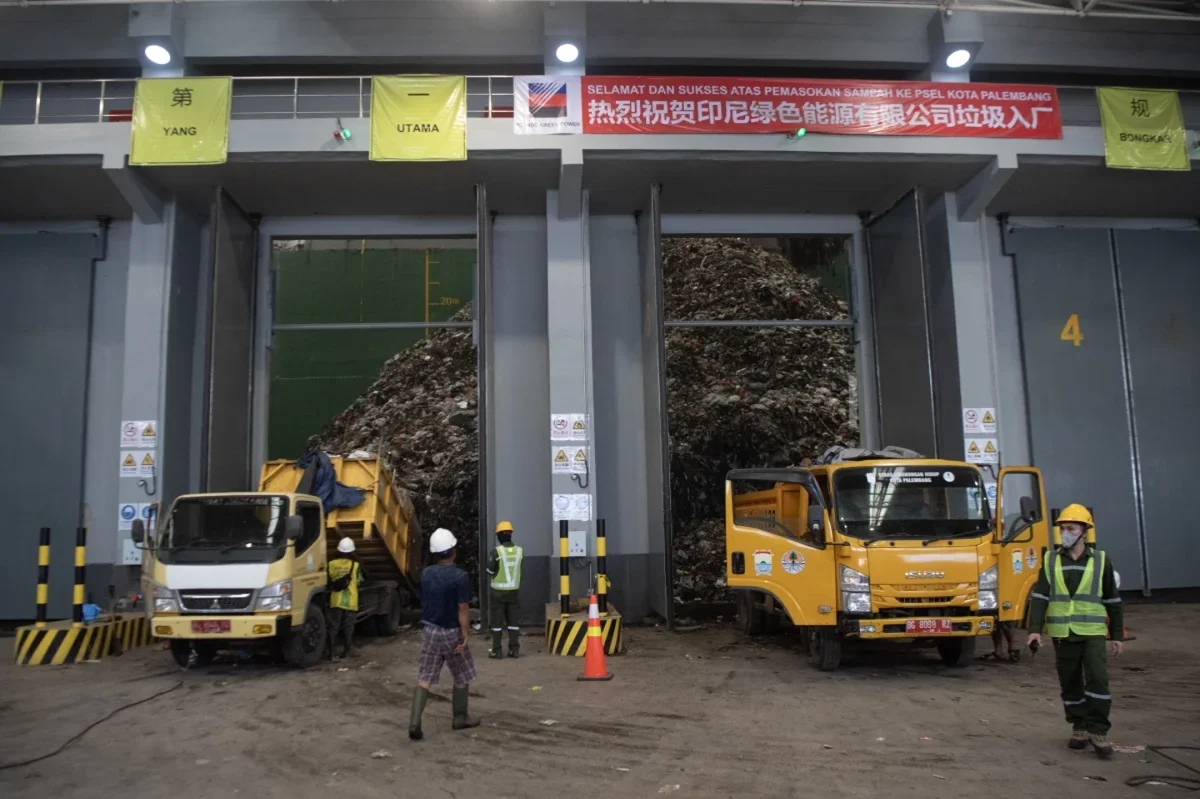
RRI.CO.ID, Palembang - The city of Palembang in South Sumatra has officially entered a new era of modern waste management after successfully operating the Keramasan Waste-to-Energy (WTE) facility. As one of the pilot projects under the National Strategic Projects program, the South Sumatran capital has demonstrated its readiness to move beyond the conventional collect, transport and dispose approach and become a pioneer in technology-driven green energy.
Palembang Mayor, Ratu Dewa, said the Keramasan WTE facility was now officially operational. Operations began with the initial waste incineration phase, using stoker moving-grate technology, on September 23, 2026.
“A total of 1,100 tons of waste was incinerated during the initial combustion trial,” he said in Palembang on Thursday, October 1 2026.
He said the Keramasan WTE facility was a National Strategic Project designated as one of the country’s pilot projects. “The WTE facility is not merely a waste-processing facility. Its presence is part of the administration’s strategic efforts to build a waste-management system that can provide broader benefits to the community,” he said, as quoted by Antara.
Ratu Dewa said that, since September 1, 2026, the Palembang City Administration, through the Environmental Agency, had begun supplying waste to the WTE facility in the Keramasan area of Kertapati Subdistrict. Waste that had previously been transported to the Sukawinatan landfill was gradually being redirected to the WTE facility to support preparations for its operation.
From September 1 to 23, 2026, the Palembang Environmental Agency arranged waste-collection vehicles and their transport rotations. The measure was taken to ensure that the processes of receiving, weighing and recording waste tonnage proceeded properly.
He continued that the stages were carried out to ensure the availability of feedstock and the optimal operation of the facility’s waste-reception system.
“The Palembang City Administration made various preparations to ensure the availability of waste as feedstock to be processed at the WTE facility. The waste-supply system uses the waste-collection vehicles that have long served areas across Palembang. The vehicles have been directed to optimize their transport rotations,” said Dewa.
In practice, every vehicle entering the WTE facility undergoes inspection and weighing. Waste-weight data serves as one of the bases for recording the amount of waste received and will be used to evaluate the waste-supply system.
“After being weighed, the waste received is directed to the waste-reception area and bunker. It is then prepared as fuel for the processing operation using stoker moving-grate technology,” he explained.
The series of processes forms part of a treatment system designed to reduce the volume of waste while utilizing its energy content to generate electricity.
In addition to the combustion process, the WTE facility is equipped with emission-control systems, including a semi-dry deacidification system, activated-carbon injection, bag filters and a Continuous Emission Monitoring System (CEMS). These systems support the control and monitoring of emissions produced during the treatment process.
The stages are part of the commissioning process, which is intended to ensure that the various systems and equipment function according to design specifications. Operations are being conducted gradually, with attention to safety, equipment reliability, emission control and the readiness of other supporting systems.
“Waste that has so far ended up in landfills is gradually being redirected so it can be utilized as an energy source through WTE technology,” he stressed.
Meanwhile, Palembang Environmental Agency Head, Ahmad Mustain, explained that operating the WTE facility required more than a ready processing plant. It also required a strong upstream system, from waste collection and transportation to weighing, the arrangement of transport rotations and tonnage monitoring.
Therefore, optimizing the waste supply is a key factor in ensuring the sustainability of the WTE facility’s operations.
He expressed hope that the facility would change the paradigm of waste management, which had long been associated with environmental problems and the need for disposal land, by turning waste into energy feedstock.
“This facility is expected to play an important role in transforming waste management in Palembang from the ‘collect, transport and dispose’ paradigm. Through this facility, waste management will shift toward a more integrated system based on the principles of reducing waste generation, utilizing waste, controlling environmental impacts and recovering energy resources,” he said. ***
News Recomendation
Memuat berita terbaru.....