



House Pushes for Optimizing Welfare-Based Social Forestry in Bali
- 21 Sep 2026 16:05 WIB
- Voice of Indonesia
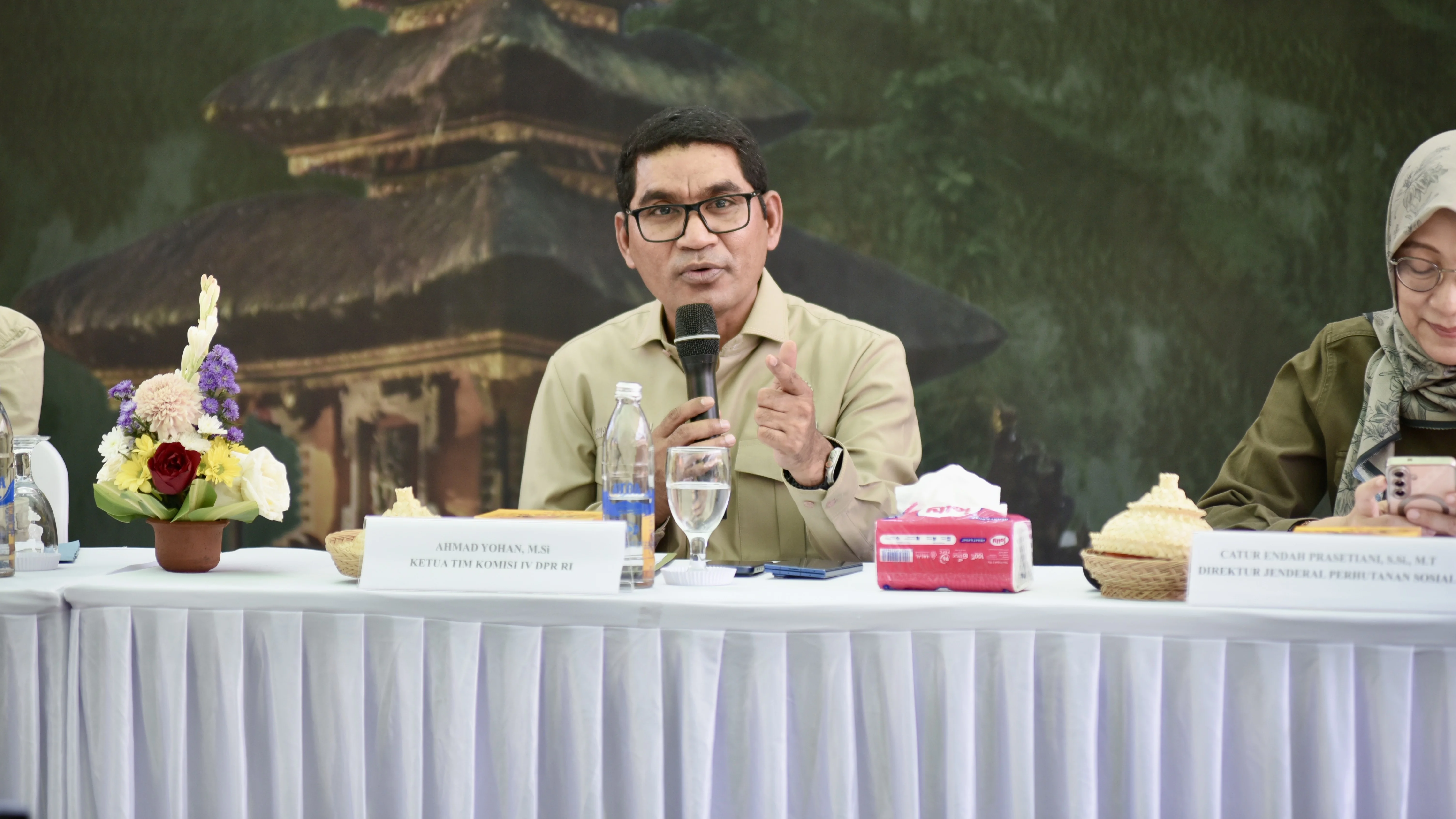
RRI.CO.ID, Mangupura – Member of the Indonesian House of Representatives (DPR), Ahmad Yohan, has called for optimizing the ecological and economic potential of the social forestry program in Bali. He said the program serves a dual purpose: protecting water catchment areas while also supporting the economies of communities living around forest areas.
"Social forestry, as a national strategic project, plays an important role in promoting sustainable, inclusive, and equitable forest management. Ecologically, the program helps protect water catchment areas, prevent erosion, and preserve biodiversity," Yohan said during a working visit to Badung Regency, Bali, on Saturday, September 19, 2026.
He added that forest areas managed by forest farmer groups have significant potential for developing non-timber forest products (NTFPs). These include honey and fruit production, as well as environmental services such as community-based ecotourism and carbon sequestration.
"Economically, social forestry has the potential to develop non-timber forest products, agroforestry, ecotourism, water management services, and carbon trading. Optimizing these opportunities requires secure management access and stronger institutional capacity among forest farmer groups," he added, as quoted by dpr.go.id.
Yohan emphasized that efforts to develop non-timber forest products are aligned with the policy of the country's President Prabowo Subianto. He said they are part of his support for achieving Indonesia’s national climate targets through the FOLU Net Sink 2030 commitment.
Indonesia’s FOLU Net Sink 2030 initiative is a strategic government program that aims to ensure the forestry sector absorbs more greenhouse gases than it emits, reaching a net absorption target of 140 million tons of CO₂ equivalent by 2030. The initiative focuses on reducing deforestation, restoring peatlands, and rehabilitating forests.
"However, we believe that implementation in the field still faces several strategic obstacles, including limited infrastructure and ecotourism facilities, as well as inadequate post-harvest processing technology," he stressed.
In addition to infrastructure challenges, he highlighted limited human resource capacity among Social Forestry managers, particularly in developing certified environmental service trading schemes with clear measurement standards and high levels of integrity.
"Technical assistance, green investment, access to financing, and sustainable partnerships with committed buyers are urgently needed to strengthen community self-reliance," he said.
The DPR affirmed that it will continue to exercise its oversight function to help ensure the social forestry program in Bali becomes a national model. The transformation is expected to provide direct economic benefits to local communities without compromising its ecological functions and sustainability.
News Recomendation
Memuat berita terbaru.....