



Bandung Turns Electric Angkots into Blockchain Digital Drive
- 17 Sep 2026 09:14 WIB
- Voice of Indonesia
Poin Utama
- Bandung City Administration has designated Bandung Angkot Utama as an entry point for developing a blockchain-based digital economy ecosystem in Bandung.
- Bandung Angkot Utama is a public transport modernization program using electric minibuses and digital technology to support the city’s BRT system.
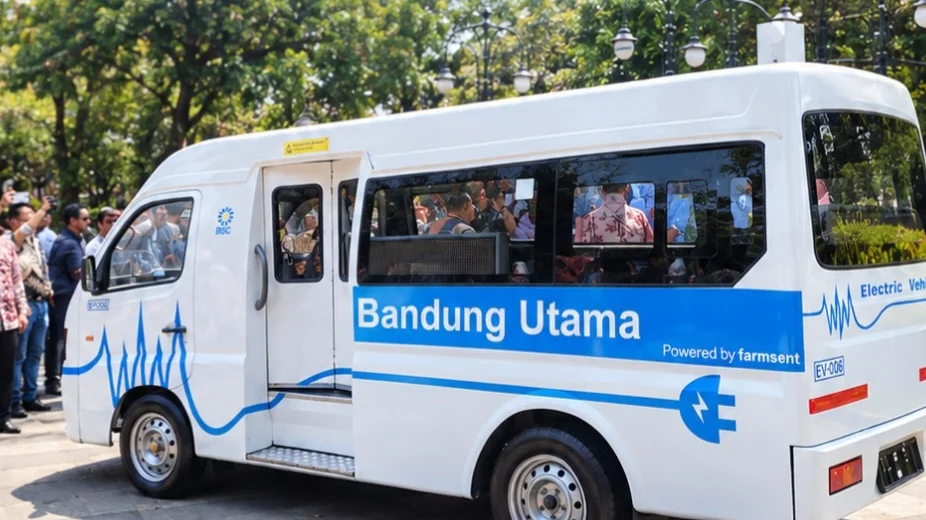
RRI.CO.ID, Bandung- The Bandung City Administration in West Java has designated the development of electric public minibus (Angkot) in Bandung Angkot Utama Program as one of the entry points for building a blockchain-based digital economy ecosystem in Bandung, West Java.
Bandung Angkot Utama is an urban public transport modernization program based on electric vehicles and digitalization. Developed by the Bandung City Administration, the project is a collaboration with the Transport Cooperative (Kopamas) and technology partners.
Bandung Mayor, Muhammad Farhan, said that the development of this ecosystem begins with sectors that directly touch public needs, one of which is public transportation. This step is being realized through the implementation of electric vehicles to support the Bus Rapid Transit (BRT) system.
“Bandung City is building a blockchain-based digital economy ecosystem. There are six actors involved. The entry point is the implementation of an electric transport ecosystem that supports BRT,” said Farhan at the Bandung City Hall on Wednesday, 16 September 2026.
According to Farhan, the electric transport ecosystem encompasses more than just vehicle provision. The ecosystem includes vehicles, batteries, vehicle and battery maintenance, safety aspects, Public Electric Vehicle Charging Stations (SPKLU), and spare parts supply.
Bandung Angkot Utama will become part of Bandung’s transport connectivity, linking various modes ranging from high-speed rail, intercity trains, toll roads, aviation, to BRT. Within this ecosystem, electric minibuses will serve as feeder transport. “This is part of Bandung’s connectivity, from high-speed rail, intercity trains, toll roads, aviation, BRT, and electric angkot as feeders,” he said.
Farhan emphasized that the administration will not take a position as a business actor in fleet procurement. Vehicle procurement will be carried out by the Community Transport Cooperative (Kopamas) through the Authorized Single Brand Holder (ATPM) or vehicle providers. Meanwhile, the city administration plays a role in providing permits and overseeing program implementation.
Farhan also ensured that the transformation toward electric vehicles is not intended to eliminate the livelihoods of existing angkot drivers. “These electric minibuses do not displace existing angkot. This replaces or modernizes existing vehicles. The drivers remain the existing players,” he said.
In addition to vehicle changes, driver working patterns will also be adjusted. By implementing a salaried driver system, the administration hopes transportation services can become more organized and no longer oriented toward meeting daily revenue targets.
The practice of vehicles waiting at terminals for passengers is also expected to be reduced. Bandung Angkot Utama has been set with a fare of IDR 7,000 (USD 0.40) according to applicable regulations, using a cashless payment system.
The fleet is also designed to be equipped with several facilities, such as air conditioning, Wi-Fi, surveillance cameras or CCTV, and priority seats for persons with disabilities.
Meanwhile, the Chairperson of Bandung City Kopamas, Budi Kurnia, said his side is ready to be part of the urban transport modernization process through the use of electric vehicles. Kopamas currently has around 475 transport units. Of that number, two electric vehicle units have been used in the initial phase.
One of these electric vehicles has even received permission to enter and operate in the Husein Sastranegara International Airport area. The vehicle has been in operation for around one month.
Budi said that the use of electric vehicles will be carried out in stages, with the long-term target of having the entire Kopamas fleet transition to electric vehicles. To support operations, the fleet will use a pool system. Vehicles will be stationed at specific locations for charging and maintenance needs, allowing fleet management to be conducted more centrally. (Annaila Azzahra-EN)
News Recomendation
Memuat berita terbaru.....