



Liberica Coffee Introduced to Protect West Kalimantan Peatland
- 02 Sep 2026 08:21 WIB
- Voice of Indonesia
Poin Utama
- The Faculty of Forestry at Tanjungpura University introduced 200 Liberica coffee seedlings in Padi Jaya Village, Kubu Raya, West Kalimantan.
- The initiative uses an agroforestry system to combine income-generating crops with forestry plants while maintaining the ecological functions of peatland areas.
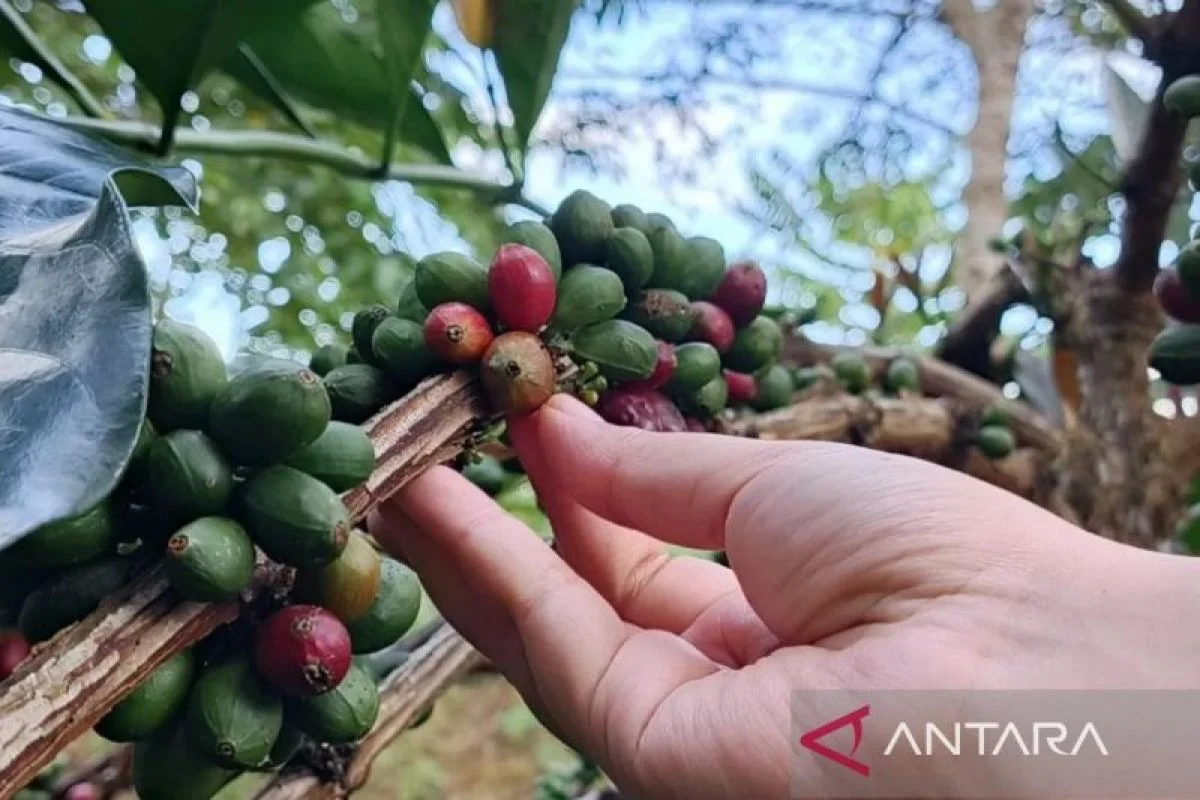
RRI.CO.ID, Pontianak - The Faculty of Forestry at Tanjungpura University has introduced Liberica coffee cultivation through an agroforestry system in Padi Jaya Village, Kubu Raya Regency, West Kalimantan. The initiative is seen as a practical solution for using peatland ecosystems productively while reducing land-burning practices that often trigger forest fires.
A team from the Faculty of Forestry at Tanjungpura University in Pontianak brought 200 Liberica coffee seedlings to the village, which serves as one of the buffer areas for the university’s Special Purpose Forest Area, known as KHDTK.
The seedlings are not intended to replace crops already growing in residents’ gardens. Instead, they are being introduced as an additional component of an agroforestry system that combines forestry plants with crops that generate income for local communities.
Head of the Community Service Program at the Faculty of Forestry of Tanjungpura University, Erianto, said KHDTK should not be viewed solely as an area for education and research. It should also provide benefits to communities living around it.
KHDTK Tanjungpura University in Pontianak serves educational, research, conservation, and community-empowerment functions. Its management therefore requires cooperation among the university, village administration, and surrounding communities.
“Conservation must go hand in hand with community empowerment. People need to benefit from the presence of forest areas so that they also develop a sense of ownership and take part in protecting them,” he said, as quoted by Antara.
The journey to Padi Jaya Village offers a picture of the community’s diverse agricultural landscape. Along the road, residents’ gardens can be seen growing various productive crops, including oil palm, areca nut, coconut, and other plants.
For Erianto and the university’s community service team, these conditions provide an important foundation for developing Liberica coffee. Community economic development does not always have to involve opening new land.
Productive crops can be incorporated into existing gardens while taking into account soil characteristics, water management, shade plants, and farmers’ capacity to maintain them.
The agroforestry approach was selected because it allows farmers to earn income from productive crops while maintaining the ecological functions of their land. Liberica coffee was chosen because it is considered relatively adaptable to certain land conditions, including swamp and peatland areas. However, Erianto cautioned that its development cannot be carried out instantly.
“Seedlings cannot simply be distributed and planted. Land suitability, groundwater levels, maintenance practices, and farmers’ capacity must all be taken into consideration,” he said.
This is important because parts of West Kalimantan are characterized by peatlands that require careful management. Poor management can prevent plants from growing optimally and increase the risk of environmental damage.
In addition to distributing Liberica coffee seedlings, the Tanjungpura University Faculty of Forestry’s community service program also delivered a conservation message to residents. The team provided educational materials, including banners on preventing land burning and posters featuring protected wildlife in West Kalimantan. The materials will be displayed at public facilities, such as the village office, schools, and Islamic boarding schools.
In peatland areas, fire remains a major concern. The use of fire to clear land can affect surrounding areas, public health, and wildlife habitats. Productive crops such as coffee are therefore expected to offer one option for more environmentally friendly land management.
The activities in Padi Jaya Village did not end with the delivery of educational materials. Residents also took part in practical training on generative and vegetative plant propagation, including air layering, budding, and grafting. They asked not only about Liberica coffee, but also about techniques for selecting branches and buds, preparing air-layering media, and improving grafting success rates.
Padi Jaya Village Head, Yani Hartomo, welcomed the program by the Faculty of Forestry at Tanjungpura University. He said the community has land potential for coffee cultivation but still faces obstacles, particularly limited capital, equipment, and technical capacity.
“We strongly welcome this program because it can help the community and the region. We hope that if there is further assistance with Liberica coffee seedlings, residents can receive certified seedlings because their fruit quality is more assured,” said Yani.
He added that the continued growth in coffee consumption presents an opportunity for village communities if they can produce quality products. ***
News Recomendation
Memuat berita terbaru.....