



Indonesia Steps Up Palm Oil Productivity and Sustainability Efforts
- 05 Nov 2025 05:42 WIB
- Voice of Indonesia
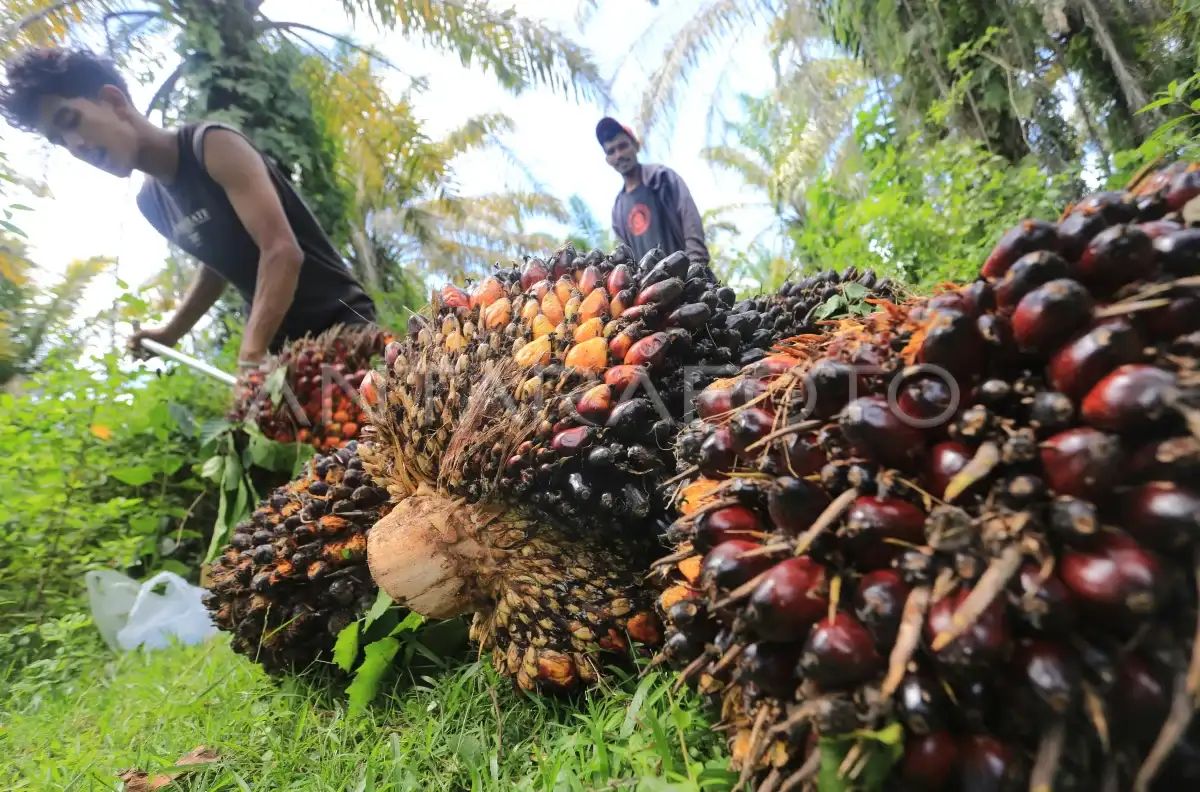
KBRN, Jakarta: Indonesia is stepping up efforts to boost productivity and sustainability in its palm oil industry, officials said on Tuesday, November 4, 2025. The government is expanding replanting programs, enforcing mandatory certification, and promoting bio-based innovation to strengthen one of the country’s largest economic sectors.
According to Dida Gardera, Expert Staff for Connectivity and Service Development at the Coordinating Ministry for Economic Affairs, Indonesia currently has 16.38 million hectares of oil palm plantations, 53 percent managed by private companies, 6 percent by state-owned enterprises, and the remaining 41 percent by independent smallholders.
Speaking at a public discussion themed “The Role of the Palm Oil Industry in Sustainable Economic Development Toward Golden Indonesia 2045”, organized by Tempo Media Group in Jakarta on Tuesday, November 4, 2025, Dida said Indonesia’s palm oil productivity still has significant room for improvement.
“Currently, the national average yield is below four tons per hectare, while large-scale companies can reach 10 to 12 tons. Through the Smallholder Palm Oil Replanting Program (PSR), we expect productivity to double or even triple within the next four years," Dida said, as quoted by antaranews.com.
He emphasized that palm oil’s main advantage over other vegetable oils such as sunflower or rapeseed lies in its fourfold higher land productivity, making it the most efficient and sustainable option to meet global demand.
“Palm oil remains the world’s most productive oil crop and offers the most sustainable solution for global vegetable oil needs,” Dida added.
To address sustainability challenges, the government is reinforcing its Indonesian Sustainable Palm Oil (ISPO) certification policy. Under Presidential Regulation No. 16/2025, ISPO certification now covers the entire value chain from plantations to downstream industries.
“ISPO certification is mandatory. For smallholders, a four-year transition period is granted, and all certification costs will be covered by the government,” Dida explained.
The government is also developing an ISPO information system to ensure land traceability and data transparency. The system will verify that all certified plantations are located outside forest areas and do not overlap with other land uses.
Dida added that the development of biofuel, biogas, and non-food palm-based products offers major opportunities for advancing a green economy. Currently, around 200 palm oil derivatives are being commercialized, ranging from cosmetics to bio-aviation fuel (bioavtur) with 40 percent of the biodiesel used domestically derived from palm oil.
Meanwhile, Surjadi, a lecturer at the Faculty of Economics and Business, University of Indonesia, highlighted the importance of incorporating social dimensions into the sustainability of the palm oil industry.
“Smallholder farmers play a vital role, but many own only 2–3 hectares and face limited access to fertilizers and financing,” he said.
Surjadi emphasized the need for farmer group mentoring so that smallholders can operate more efficiently and gain greater value from their harvests. Ideally, smallholders should be organized into cooperatives and supported by large companies or government agencies to strengthen their bargaining position.
He also underscored the need to pay more attention to plantation workers, who deserve decent livelihoods and formal employment status as integral parts of the palm oil ecosystem.
Citing a 2020 IPB University study published in Forest Policy & Economics, Surjadi noted that the trade-off between economic growth and environmental protection can be minimized.
“The research shows that win-win solutions are always possible. With proper management, even palm oil plantations on peatlands can reduce emissions while maintaining productivity,” he continued.
Eddy Martono, Chairman of the Indonesian Palm Oil Association (GAPKI), said that Indonesia aims to increase palm oil production to 92 million tons by 2045, nearly double the current output of around 53 million tons.
“Downstream expansion won’t succeed if the upstream sector remains stagnant. Production has been flat over the past five years. GAPKI is pushing for improved smallholder productivity and greater plantation efficiency," Eddy said.
He also highlighted the positive regional economic impact of the biodiesel program, which helped stabilize palm oil prices when they once fell below production costs.
“At one point, many farmers left their fruit to rot on trees. Now, thanks to the biodiesel program, prices have recovered and local economies are thriving again,” Eddy concluded.
With its massive economic footprint, strong government commitment to sustainability, and growing downstream potential, Indonesia’s palm oil industry remains a cornerstone of national development balancing economic growth, environmental stewardship, and social welfare on the path to achieving Golden Indonesia 2045. ***
News Recomendation
Loading latest news.....